JD Vance Sends Letter to Iran Seeking Nuclear Talks as US Weighs Renewed Strikes
US Vice President JD Vance has sent a personal letter to one of Iran's most powerful national security officials, opening a potentially important diplomatic channel at a moment when Washington is considering its next military moves against Tehran.
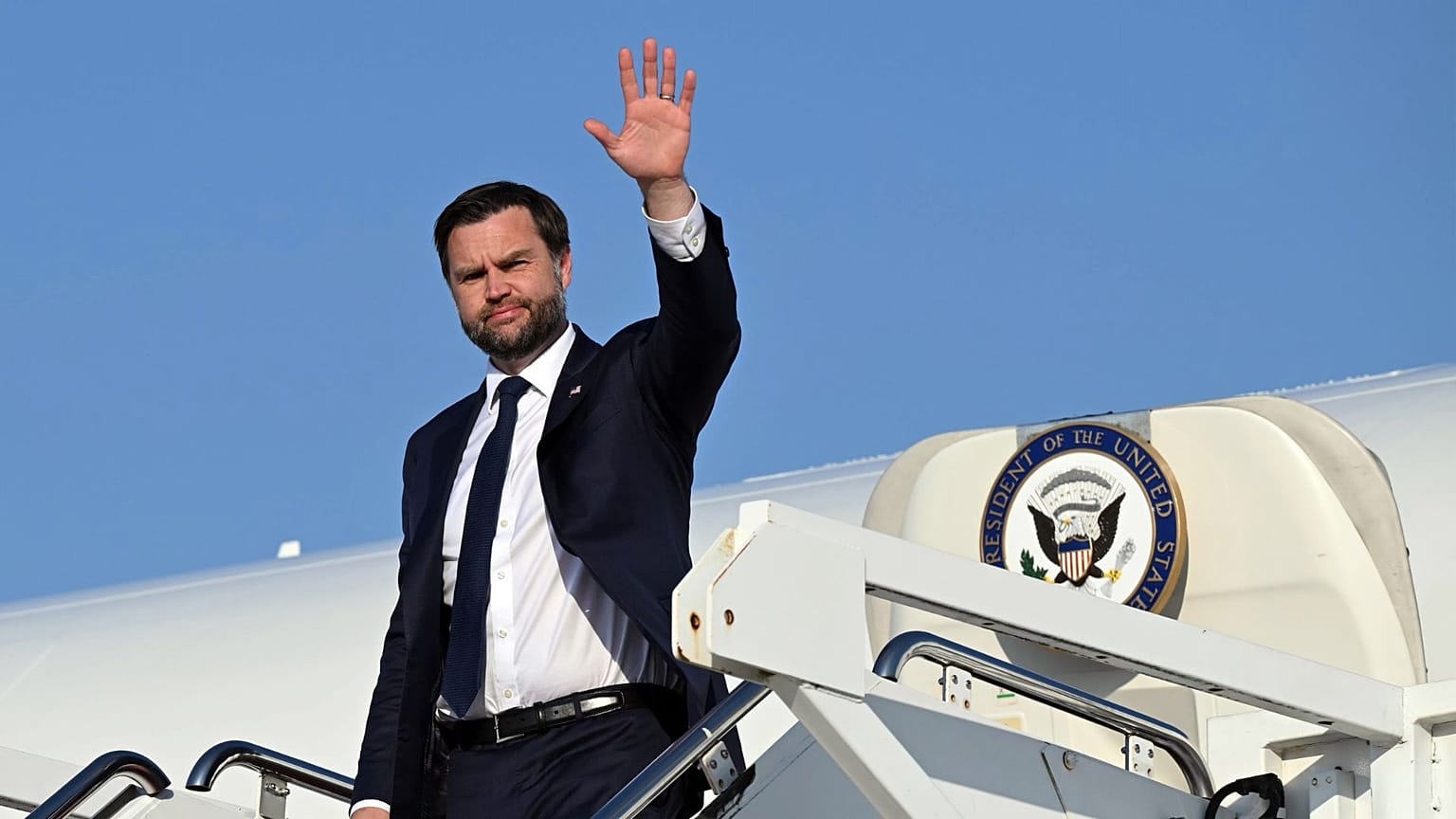
Iran confirmed Thursday that it had received the letter but had not yet formally responded.
The outreach could become one of the most consequential diplomatic efforts since the latest phase of the US-Iran conflict began. But significant uncertainty remains over exactly what Washington is offering — and even over how the Trump administration publicly characterizes the letter.
US media reports say Vance contacted Mohsen Rezaei, secretary of Iran's Supreme National Security Council, in an effort to explore renewed negotiations.
Reuters reported Thursday that Iran's semi-official Tasnim news agency confirmed Tehran had received the letter. Reuters said it could not independently verify US media reports describing the outreach as an attempt to revive peace negotiations.
Nuclear Program at the Center of Potential Talks
According to Axios, Vance told Rezaei that negotiations intended to prevent further American military action would have to address Iran's nuclear program.
The outreach represents one of Washington's highest-level attempts in months to communicate directly with Iran's leadership.
The central disagreement, however, remains familiar.
Washington wants negotiations over Iran's nuclear activities before providing major economic concessions. Tehran wants the United States to take concrete steps — including easing sanctions, releasing frozen funds and changing restrictions affecting Iranian oil exports — before making significant concessions of its own.
That disagreement over sequencing could determine whether Vance's initiative produces negotiations or becomes another failed attempt at diplomacy.
Trump Says the Letter Was About Medical Supplies
President Donald Trump has publicly offered a notably different description of Vance's outreach.
Asked Wednesday whether he had directed Vance to contact Iran to restart negotiations, Trump said he had not.
Instead, Trump said the communication concerned Iran's need for medical supplies and that Vance had asked whether he supported helping provide them.
That explanation contrasts with reports in the Wall Street Journal and New York Times, cited by Reuters, describing the letter as an attempt to revive negotiations.
Neither interpretation necessarily rules out the other. Humanitarian assistance could provide an opening for broader diplomatic contacts.
But the differing accounts illustrate the uncertainty surrounding a negotiation being conducted against the backdrop of an ongoing conflict.
Qatar Emerges Again as the Middleman
Qatar appears to be playing an important role in the latest diplomatic push.
Separate reporting indicates Qatari mediators have been working to find terms capable of bringing Washington and Tehran back toward an agreement.
The Guardian reports that Vance's letter was sent to Rezaei following Qatari mediation and that the proposal links nuclear commitments with steps involving sanctions relief and the Strait of Hormuz.
Qatar's involvement would follow a familiar pattern.
Doha has repeatedly positioned itself as an intermediary in conflicts where Washington has limited or hostile relations with the other side. Its ability to communicate with both the United States and Iran gives it an increasingly important diplomatic role in the Gulf.
Iran Has Its Own Conditions
A return to negotiations would not mean the two sides are close to an agreement.
Iran continues to insist that Washington must address sanctions and economic restrictions as part of any settlement.
The Guardian reports that Tehran is particularly reluctant to make irreversible nuclear concessions in exchange for American measures that could later be reversed. Discussions have therefore included the possibility of guarantees intended to ensure that both sides fulfill their commitments.
This goes to the heart of Iran's distrust of Washington.
For Tehran, the issue is not simply what concessions the United States might offer today. Iranian leaders want assurances that those concessions will survive future political changes in Washington.
For the United States, meanwhile, the central concern remains whether Iran will make verifiable commitments concerning its nuclear program.
Diplomacy Against the Threat of Another Escalation
What makes Vance's letter particularly significant is its timing.
The outreach is occurring while the possibility of renewed military escalation remains very real.
Axios reports that the Trump administration is considering further major combat operations if diplomacy fails.
The economic consequences of the conflict are already substantial.
Reuters reported this week that Pentagon data puts the US military cost of the Iran war at more than $47 billion, including more than $29 billion associated with replacing expended munitions.
Energy markets are also watching the diplomatic effort closely.
Oil prices fell Thursday as hopes for US-Iran negotiations partially outweighed fears about further disruption to Middle Eastern energy supplies. Brent crude settled at $114.88 a barrel, while US West Texas Intermediate closed at $102.
Diplomacy therefore has consequences extending far beyond Washington and Tehran.
Why Vance Matters
Vance's personal involvement is also noteworthy.
The vice president has previously been associated with negotiations involving Iran and is generally viewed as more skeptical of prolonged American military engagements than some other figures in Washington.
If he ultimately leads another negotiating effort, his role could indicate that the White House wants to preserve a diplomatic exit even while maintaining military pressure.
That strategy would essentially give Tehran two possible paths: negotiate over the nuclear program and economic restrictions, or risk another escalation.
Iran, however, is attempting to reverse that pressure by insisting that Washington must make concessions of its own before expecting Tehran to surrender its strongest bargaining positions.
A Letter That Could Decide What Comes Next
It is still too early to describe Vance's message as a peace agreement — or even as the beginning of formal peace negotiations.
The actual letter has not been publicly released.
Iran has acknowledged receiving it but has not announced its formal response. Trump describes the outreach primarily in humanitarian terms, while multiple US media reports portray it as an effort to reopen negotiations.
Those distinctions matter.
What is clear is that a diplomatic channel remains open at a moment when another round of fighting remains possible.
For Washington, the objective appears to be finding out whether Iran is prepared to negotiate seriously over its nuclear program.
For Tehran, the question is whether the United States is prepared to offer sanctions relief and other concrete concessions in return.
Vance's letter may therefore prove important not because of what it immediately accomplishes, but because of what Iran does next.
If Tehran accepts a negotiating framework, the United States and Iran could return to the table.
If it rejects the initiative — and Washington concludes that diplomacy has been exhausted — the Middle East could instead be preparing for another dangerous escalation.