Israel Votes Today: Netanyahu Faces His Biggest Test Since October 7
Israelis head to the polls on October 27 in the country's first national election since the October 7 attacks and the wars that followed. Benjamin Netanyahu is fighting to remain prime minister, but the final polls point toward something Israel knows all too well: a divided Knesset in which neither camp has an obvious path to 61 seats.
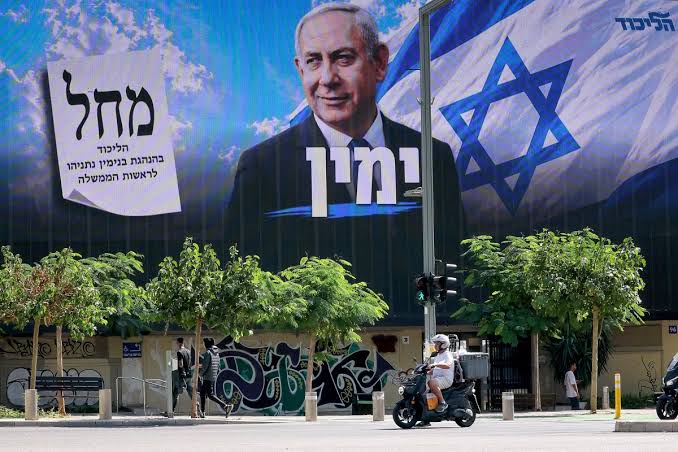
For three years, Israel has fought wars, buried its dead, mobilized hundreds of thousands of soldiers and reservists, battled over the fate of hostages and argued over who should be held responsible for the worst security failure in the country's history.
Today, Israelis finally vote.
The October 27 election is the first national election since the Hamas-led attacks of October 7, 2023, and the enormous military and political upheaval that followed.
At its center stands one man who has dominated Israeli politics for decades: Benjamin Netanyahu.
Israel's longest-serving prime minister is asking voters to entrust him with the country once again.
His opponents are asking a fundamentally different question: after October 7, should he ever have been allowed to remain in power this long?
That makes this election much more than a conventional contest between left and right.
It is a judgment on Netanyahu's leadership, Israel's security establishment, the country's conduct during years of war and the political system that will govern Israel in their aftermath.
Yet for all the drama surrounding Netanyahu, election night could ultimately be decided by a much less emotional number:
61.
That is the number of seats required for a majority in Israel's 120-member Knesset.
And according to the final polls, neither side can be confident of reaching it.
The Election at a Glance
Election day | October 27, 2026 |
Parliament | 120-seat Knesset |
Majority | 61 seats |
Electoral threshold | 3.25% |
Prime minister | Benjamin Netanyahu |
Netanyahu's party | Likud |
Major challenger | Gadi Eisenkot, Yashar |
Polls close | 10 p.m. |
Official results publication | November 4 |
Israel's Central Elections Committee has set November 4 for publication of the election results.
But Israelis will not have to wait that long for the political drama to begin. Television exit polls are expected when polling stations close at 10 p.m., followed by the gradual arrival of actual ballots.
And those first numbers could trigger an extraordinary night of coalition arithmetic.
The Polls Point to Deadlock
Israel stopped publishing new opinion polls in the final days before the election, leaving the last surveys with remarkably different pictures of individual parties but one strikingly similar conclusion:
Neither camp has a secure majority.
A Channel 12 poll projected:
Party/bloc | Projected seats |
|---|---|
Yashar | 23 |
Likud | 21 |
B'Yachad | 15 |
Democrats | 10 |
Joint List | 9 |
Yisrael Beiteinu | 8 |
Shas | 8 |
Otzma Yehudit | 8 |
United Torah Judaism | 7 |
Religious Zionism | 6 |
Ra'am | 5 |
Under that poll, the anti-Netanyahu "change" bloc had 56 seats, Netanyahu's coalition had 50, and the two predominantly Arab lists held a combined 14.
Channel 13 produced a similar deadlock: 54 seats for the change bloc, 50 for Netanyahu's bloc and 16 for the Arab parties.
Kan's final survey was even more complicated, putting the change bloc at 52, Netanyahu's coalition at 50, the Arab parties at 14 and Yoaz Hendel's Reservists faction at four.
One polling aggregation produced an almost perfect political tie: 53 seats for Netanyahu's coalition, 53 for the Zionist opposition and 14 for the Arab lists.
The message across those numbers is more important than the exact seat totals.
Israel may wake up after the election without a clear government.
Netanyahu Is Still Standing
That Netanyahu is even in this position is politically remarkable.
He enters the election at 77 after years that would have ended the careers of many political leaders.
October 7 happened on his watch.
His government has faced fierce criticism over the failures preceding the Hamas attack, the handling of the hostage crisis and questions of political accountability.
Netanyahu also remains on trial on corruption charges, which he denies.
Yet he has survived.
His argument to Israeli voters is essentially that the same turbulent years his opponents use against him also demonstrate why Israel needs an experienced leader.
Israel has fought Hamas in Gaza, Hezbollah in Lebanon and confronted Iran directly during a period in which the regional balance of power has changed dramatically.
Netanyahu presents himself as the statesman capable of navigating that environment.
His opponents see almost the opposite story.
For them, October 7 represents the catastrophic failure of a political and security strategy pursued under Netanyahu's leadership.
That argument has given unusual significance to his principal challenger.
Gadi Eisenkot Offers a Different Kind of Security Candidate
Gadi Eisenkot is not campaigning against Netanyahu as a traditional left-wing alternative.
He is a former chief of staff of the Israel Defense Forces.
That matters in an election where security remains central to political life.
Eisenkot leads the centrist Yashar party and has campaigned heavily on accountability, national unity and an investigation into the failures surrounding October 7.
Several final surveys placed Yashar ahead of Likud.
But Israel does not directly elect its prime minister.
Finishing first does not guarantee Eisenkot the premiership any more than finishing second necessarily removes Netanyahu from office.
The presidency will eventually consult the elected factions and choose a member of the Knesset considered capable of assembling a government.
That means the real contest begins with the party results — but may end weeks later with coalition negotiations.
Israel's Opposition Has a Mathematical Problem
Netanyahu's opponents include an ideologically diverse collection of politicians.
Naftali Bennett and Yair Lapid are running together under B'Yachad, while Avigdor Lieberman's secular nationalist Yisrael Beiteinu and Yair Golan's Democrats form other important components of the anti-Netanyahu camp.
They can potentially defeat Netanyahu's traditional coalition in seat totals.
Forming a government is harder.
Suppose the Zionist opposition wins around 53 seats, roughly where one final polling projection placed it.
Add Ra'am's projected five seats and it reaches only 58.
Add the Joint List as well and the mathematics becomes comfortable — roughly 67 seats.
Politically, however, it becomes much more difficult.
Several Zionist opposition parties have rejected governing arrangements involving Arab parties.
That creates one of the central paradoxes of this election.
The anti-Netanyahu parties could collectively outperform Netanyahu's allies while still being unable to construct a government.
Arab Voters Could Decide the Election
That makes Arab turnout one of the most important numbers to watch.
The predominantly Arab Joint List and Ra'am were projected to win roughly 14 to 16 seats combined in several final surveys.
Mansour Abbas's Ra'am has already demonstrated that an Arab party can participate in the coalition politics of an Israeli government, having joined the Bennett-Lapid coalition formed in 2021.
But opposition parties do not all agree on whether such an arrangement should happen again.
The Joint List presents an even more difficult coalition question.
The result could therefore produce an unusual situation in which Arab parties hold enough seats to determine who can mathematically command the Knesset, while the larger Jewish-led parties remain unwilling to build the coalition necessary to use those seats.
October 7 Still Hangs Over Everything
This is Israel's first opportunity to elect a government since the attack that transformed the country.
The Hamas-led assault killed about 1,200 people and saw 251 people taken hostage.
The war that followed transformed Gaza and Israel, expanded into a broader regional confrontation and reshaped Israeli politics.
But the election debate is not simply about whether Israel should have fought its enemies.
There is broad support among much of the Jewish Israeli electorate for many of the country's military campaigns.
The more politically explosive question is responsibility.
Who failed before October 7?
And who should answer for it?
A recent Israel Democracy Institute survey found that 71% of Jewish Israelis supported a high-level investigation into the failures surrounding the attack.
That puts Netanyahu in a difficult position.
He can campaign on Israel's subsequent military achievements while simultaneously facing voters who believe the country's leadership has never adequately accounted for how October 7 happened in the first place.
Then There Is the Draft
One domestic issue could be nearly as important to coalition negotiations as the war itself: ultra-Orthodox military service.
The question of exemptions for Haredi men has existed for decades.
Years of war have made it considerably more explosive.
Israeli reservists have endured repeated mobilizations while the military has faced manpower pressures. Against that background, continued exemptions for large numbers of ultra-Orthodox men have become increasingly difficult for many Israelis to accept.
A recent survey found 72% of Jewish Israelis supporting a more equal conscription arrangement.
But Netanyahu has traditionally depended on the ultra-Orthodox Shas and United Torah Judaism parties.
That creates another coalition dilemma.
Politicians such as Lieberman strongly oppose the existing Haredi exemption arrangements.
Netanyahu may therefore be able to find potential parliamentary partners on security issues while discovering that the military draft makes governing with them extremely difficult.
The Most Dangerous Number May Be 3.25
While television coverage will concentrate on Netanyahu and Eisenkot, election experts will be staring at another number:
3.25%.
That is Israel's electoral threshold.
A party falling just below it receives no representation in the Knesset.
And that can transform the entire election.
The final polls placed several smaller parties close to the threshold.
Some surveys had Yoaz Hendel's Reservists faction entering parliament with four seats. Others had it disappearing completely.
Ofer Winter's Amcha Yisrael has faced similar uncertainty.
The difference between 3.2% and 3.3% of the national vote could therefore have consequences far beyond a single small party.
Votes cast for parties that fail to cross the threshold do not translate into Knesset representation, changing the effective distribution of the 120 seats among parties that survive.
A few tenths of a percentage point could consequently shift several mandates.
And in an election where the blocs are separated by only a handful of seats, that could determine who governs Israel.
What Happens If Nobody Gets 61?
That is no longer an unlikely scenario.
It may be the most plausible one.
Israel's president, Isaac Herzog, will consult the parliamentary factions after the results and determine which member of the Knesset has the best chance of forming a government.
Then the negotiations begin.
Netanyahu could attempt to bring another right-wing or centrist faction into his coalition.
The opposition could attempt to construct a broader anti-Netanyahu government.
Ra'am could become pivotal.
Individual parties could reconsider promises made during the campaign.
Or nobody could succeed.
Israel has experienced repeated elections before when its fragmented political system failed to produce a durable majority.
Another election in early 2027 is therefore not impossible.
Until a replacement government is formed, Netanyahu could remain in office as caretaker prime minister.
That means Israelis could vote against Netanyahu in aggregate and still see him remain prime minister for months.
What to Watch on Election Night
1. Netanyahu's bloc — not simply Likud
Likud's individual result matters less than the combined number for Likud, Shas, United Torah Judaism, Otzma Yehudit and Religious Zionism. Watch whether that number approaches 61.
2. Yashar versus Likud
If Eisenkot defeats Netanyahu's party, it will carry enormous symbolic significance and strengthen his claim to be given an opportunity to form a government.
But it will not automatically make him prime minister.
3. Arab turnout
Strong turnout among Arab citizens could increase the representation of Ra'am and the Joint List and fundamentally alter the coalition arithmetic.
4. The 3.25% threshold
Watch every party hovering around it. One small faction entering or disappearing from parliament could move several seats elsewhere.
5. The Haredi parties
Shas and United Torah Judaism remain central to Netanyahu's traditional coalition. Their combined strength will matter considerably.
6. Exit polls versus actual ballots
The 10 p.m. exit polls will provide the first dramatic picture of the election.
They are not the result.
In an election this close, small changes during the actual count could move an entire bloc across — or away from — the 61-seat line.
The Election Is About Netanyahu — But the Result May Be About Mathematics
Benjamin Netanyahu has spent much of his political career convincing Israelis that elections are ultimately choices about him.
This one may come closer than most to proving that argument.
For his supporters, Netanyahu remains the experienced statesman who led Israel through an extraordinary period of regional warfare and confrontation.
For his opponents, the election represents the first national opportunity since October 7 to impose political accountability on the man who was prime minister when Israel suffered its greatest security catastrophe.
But Israel's electoral system may deny both sides the decisive verdict they want.
A Netanyahu defeat at the ballot box does not necessarily mean the end of Netanyahu.
An Eisenkot victory does not necessarily make Eisenkot prime minister.
And a larger opposition bloc does not necessarily produce an opposition government.
Ultimately, Israel's election may come down to a brutally simple calculation.
Not who finishes first.
Not who declares victory first.
Not even who receives the most applause when the exit polls appear at 10 p.m.
But who can find 61 members of the next Knesset willing to govern together.
Until someone can, Israel's election will not truly be over.