Israel Heads to 2026 Knesset Election Amid Deep Divisions and Regional War
Israel is hours away from a high-stakes Knesset election that could determine the political survival of Benjamin Netanyahu and the country's direction after years of war and political conflict.
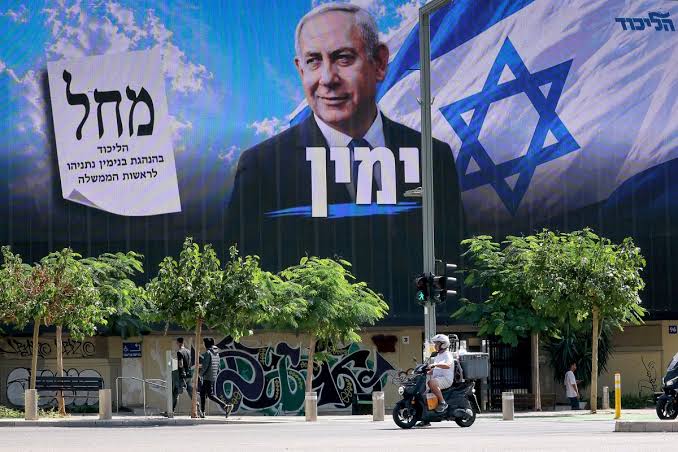
Israel stands hours away from voting in a general election that could determine not only who governs the country, but the political future of Prime Minister Benjamin Netanyahu and the direction Israel takes after years dominated by war, security crises, domestic political confrontation, and intense international pressure. For readers who have not closely followed Israeli politics, understanding this election requires looking at the mechanics of the vote, the parties and blocs running, and the shadow cast by the events of October 7.
Israelis are voting in a national election to choose the 120 members of the Knesset, the country's unicameral parliament. Polls open and close across the nation, with millions of citizens eligible to cast ballots. The first exit polls are expected immediately after voting concludes, while official results take longer to tabulate and verify.
Israel's political system is built on proportional representation, where the entire country acts as a single electoral district. Parties must clear a minimum electoral threshold of the total valid votes cast to enter the 120-seat Knesset. Because seats are distributed proportionally according to vote share, no single party in Israel's history has ever won an outright majority of 61 seats on its own. Governing requires assembling a coalition, making post-election negotiations far more important than which individual party finishes first in the vote count.
The political landscape features a range of parties and leaders. Benjamin Netanyahu's Likud anchors the right-wing and nationalist space. Principal opposition parties compete against Likud from the center and left. Religious and ultra-Orthodox parties represent specific communal interests and traditionally form the backbone of Netanyahu-led coalitions. Nationalist and right-wing factions push hardline agendas on security and settlements, while Arab parties represent Palestinian citizens of Israel and campaign on civil equality, minority rights, and ending the occupation.
Final polls published immediately before the election show a tight race, projecting seat totals for major parties and calculating the relative strength of the Netanyahu-aligned bloc versus parties that could potentially form an alternative government. Polling projections indicate a knife-edge contest where every seat counts, though polls remain distinct from actual election results.
For Benjamin Netanyahu, this election carries immense personal and political consequences. Having dominated Israeli politics for decades, he faces severe controversies surrounding his leadership, ongoing legal challenges, and deep public polarization. Winning could secure his political survival and allow him to form another right-wing coalition, while losing could end his long tenure in power and alter the nation's political trajectory.
The shadow of October 7 and the subsequent Gaza war looms over every aspect of the campaign. Public arguments over responsibility for the security failures, the fate of hostages, military strategy, and the management of the wider Gaza conflict have defined the national mood. Polling and public discourse show voters divided over whether to place primary blame on Netanyahu's government, the security establishment, or both.
Beyond the war, security concerns extend across multiple fronts, including Iran, Hezbollah in Lebanon, Syria, and wider regional pressures. Security has traditionally been Netanyahu's core political strength, but critics and opponents argue that ongoing conflicts and unresolved threats have turned security into a vulnerability for his administration.
Voters are also weighing critical domestic issues. The economy and the rising cost of living weigh heavily on households. Long-standing controversies over judicial reform, military service exemptions for ultra-Orthodox Israelis, and widening fractures between secular and religious communities continue to polarize society. Tensions surrounding West Bank settlements and the broader Palestinian question remain central points of debate.
Arab citizens of Israel represent a crucial voting bloc. Turnout expectations among Arab voters and the performance of major Arab political parties could directly impact whether either major political bloc manages to reach the magic number of 61 seats.
Coalition mathematics will dictate the morning after the vote. Several realistic scenarios face the country. If Netanyahu's bloc reaches 61 or more seats, he will likely form the next government. If the opposition reaches a workable majority, a new coalition could take power. If neither side reaches 61, Israel faces prolonged political deadlock or new coalition maneuvering. Furthermore, if a small party unexpectedly falls below the electoral threshold, wasted votes could entirely alter the seat distribution and hand victory to one side or the other, with smaller faction leaders serving as kingmakers.
On election night, observers will monitor specific indicators as results arrive: overall turnout rates, whether smaller parties clear the electoral threshold, the total seat count for Netanyahu's bloc, Arab voter turnout, the performance of key fringe parties, and any discrepancies between early exit polls and the official count.
The most important number on election night may not be which party finishes first, but whether either political camp can assemble 61 seats in the 120-member Knesset.