Florida Learjet Crash: What Happened in the Final Minutes Before Nine People Died?
A private Learjet 60 travelling from Texas to the Bahamas plunged more than 27,000 feet in approximately one minute before crashing into a residential area in South Florida. The crew had reported icing and turbulence before declaring an emergency. All nine people aboard died. Investigators are now working to establish what happened during the aircraft's final moments.
A routine flight turns into a disaster
On Sunday, November 1, 2026, a private Bombardier Learjet 60 departed Austin-Bergstrom International Airport in Texas, heading towards North Eleuthera in the Bahamas. It was a flight that would end in one of the deadliest aviation accidents in the United States this year.
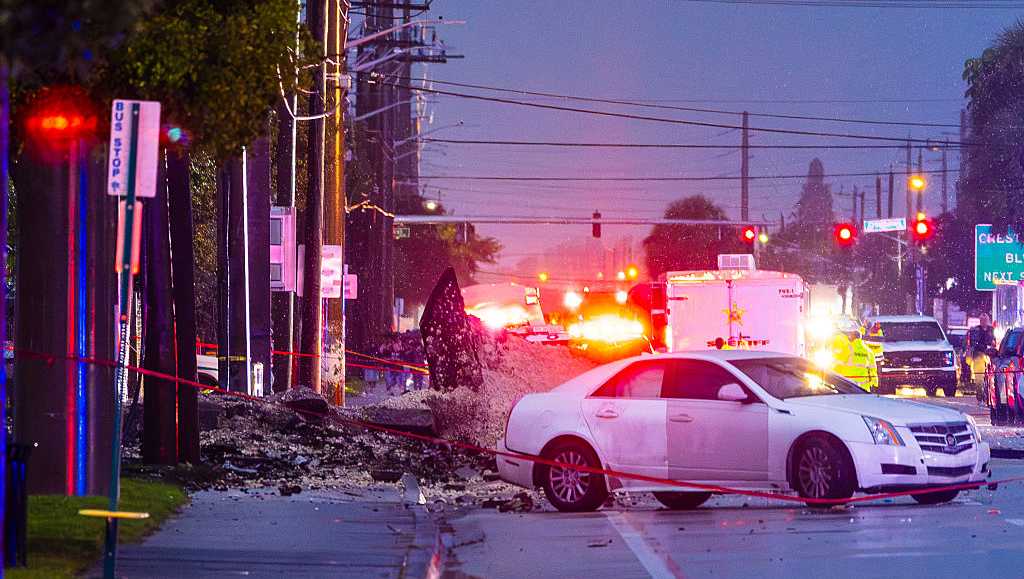
At approximately 12:50 p.m. local time, the aircraft crashed near Military Trail in Greenacres, Palm Beach County, Florida. The impact produced a massive fireball and left a crater near a residential community.
All nine people aboard were killed. Authorities reported no immediate fatalities or injuries among people on the ground.
The crash also forced the evacuation of approximately 600 residents from a nearby mobile-home community as emergency crews secured the area and investigators began examining the wreckage.
What makes the disaster particularly troubling is that the aircraft's final communications with air traffic control captured an increasingly desperate sequence of events. The crew initially reported icing and turbulence, but within minutes, the aircraft was descending at an extraordinary rate.
The final radio calls: From manageable icing to Mayday
The aircraft was cruising at approximately 35,000 feet when a member of the flight crew contacted air traffic control to report the weather conditions.
According to recordings reviewed by Reuters and the Associated Press, the crew described ice accumulating on the aircraft and moderate turbulence. The pilot indicated that the situation was manageable but requested information about better flying conditions ahead.
The crew subsequently requested permission to climb approximately 2,000 feet, seeking a higher altitude that might offer more favourable conditions.
The request was approved.
But the situation deteriorated almost immediately.
Instead of continuing its climb, the Learjet began losing altitude rapidly. The pilot reported that the aircraft was descending at approximately 8,000 to 10,000 feet per minute before issuing a Mayday call.
The urgency increased as the descent accelerated.
The crew then reported an overspeed condition while descending at approximately 20,000 feet per minute. An overspeed condition occurs when an aircraft exceeds a specified operating speed limit, potentially creating dangerous aerodynamic and structural stresses.
In the final radio communications, the pilot warned air traffic controllers:
"We're going to crash into the ground."
The last reported communication was a desperate statement that the crew was out of time.
Flight-tracking information reviewed by Flightradar24 indicated that the aircraft's vertical descent rate exceeded 32,000 feet per minute at one point.
The aircraft had gone from reporting manageable icing and moderate turbulence to an uncontrolled-looking descent in an extraordinarily short period.
How did the aircraft lose so much altitude?
The most striking feature of the crash is the speed at which the aircraft descended.
A descent rate of 27,000 feet per minute is approximately 450 feet per second. At that rate, an aircraft can lose thousands of feet of altitude in seconds.
However, a high descent rate alone does not establish what caused an aircraft to lose control. Investigators must determine whether the descent resulted from a loss of control, an aerodynamic problem, structural damage, severe atmospheric conditions or a combination of factors.
One important detail is that the crew reported an overspeed condition while the aircraft was descending.
Aircraft are designed to operate within defined speed and structural limits. When an aircraft exceeds its operating limits, aerodynamic forces can increase significantly. Depending on the circumstances, this can create additional stresses on the aircraft and complicate recovery.
The critical question for investigators is what happened before the aircraft entered that condition.
Did the aircraft encounter an atmospheric disturbance that caused it to lose control? Did icing affect its aerodynamic performance? Was there a mechanical problem? Or did several factors combine to create an emergency that the crew could not recover from?
Those questions cannot be answered conclusively from radio recordings alone.
The icing question: Why ice can become dangerous at high altitude
Icing is one of the most important clues in the aircraft's final communications.
Aircraft icing occurs when supercooled water droplets freeze after striking an aircraft's surfaces. Ice can accumulate on wings, the tail and other exposed components, depending on the aircraft's design and the atmospheric conditions.
Even relatively small amounts of ice can affect aerodynamic performance.
The accumulation can change the shape of a wing, disrupt airflow and increase drag. It can also reduce lift, making it more difficult for an aircraft to maintain its intended flight path.
Modern business jets are equipped with systems designed to prevent or remove ice accumulation. These systems are essential because aircraft regularly operate in environments where temperatures are far below freezing.
However, anti-icing and de-icing systems do not eliminate every possible risk. Severe icing conditions, system limitations or other contributing factors can create situations that require pilots to make difficult decisions.
In January 2024, the National Transportation Safety Board issued a safety alert warning pilots about the risks of in-flight icing. The agency explained that ice accumulation can make managing an aircraft's flight path and airspeed more difficult and, in some circumstances, prevent it from maintaining level flight.
That warning is relevant to the Florida investigation, but it does not establish that icing caused this particular crash.
The crew also reported moderate turbulence and precipitation. Investigators will need to examine the weather conditions along the aircraft's route, including whether it encountered a stronger storm system shortly before the descent began.
Weather may have played a role, but the evidence must establish how.
What happened to the Learjet 60?
The aircraft involved was a Bombardier Learjet 60, a twin-engine business jet that has been used extensively in private and charter aviation.
The aircraft was approximately 22 years old and registered as N722BD. It was travelling from Austin, Texas, to North Eleuthera in the Bahamas when it crashed.
The Learjet 60 has a long operational history, but the age of an aircraft alone does not establish that it is unsafe. Aircraft safety depends on maintenance, inspections, operational procedures, component condition and compliance with aviation requirements.
Investigators will therefore examine the specific aircraft rather than draw conclusions from its age or model.
Its maintenance records, inspection history, recent repairs and any reported mechanical problems will be important parts of the investigation.
The investigation will also consider the aircraft's anti-icing systems, engine performance and flight-control systems.
The aircraft's previous operational history may help investigators determine whether there were warning signs before the fatal flight.
What investigators will examine
The National Transportation Safety Board is leading the investigation, with assistance from the Federal Aviation Administration.
Investigators face the difficult task of reconstructing an accident that unfolded in approximately a minute.
Several areas will be particularly important.
1. Flight data and cockpit recordings
Investigators will seek to recover and analyse available flight-recording equipment. Flight data can reveal altitude, speed, aircraft attitude, engine performance and control inputs.
Cockpit voice recordings, if available and recoverable, could provide further information about the crew's observations and decisions.
2. Weather conditions
Meteorological data will help establish whether the aircraft encountered severe icing, turbulence, thunderstorms or other hazardous atmospheric conditions.
Investigators will compare weather information with the aircraft's recorded flight path.
3. Aircraft maintenance
The maintenance history will help determine whether the aircraft had previously experienced problems involving its engines, flight controls, electrical systems or anti-icing equipment.
4. Crew decisions and procedures
Investigators will review the crew's actions, training, communications and response to the developing emergency.
This is not simply about determining what the pilots said. It is about reconstructing the sequence of events and understanding what information and options were available to them at each stage.
5. Physical evidence from the wreckage
The condition and distribution of aircraft debris can help investigators identify whether structural failure occurred before impact or whether the damage resulted from the collision with the ground.
The aircraft's final flight path will also be compared with physical evidence from the crash site.
A preliminary investigation report is expected to provide additional information, although establishing a probable cause may take considerably longer.
The disaster on the ground
Although all nine fatalities occurred aboard the aircraft, the crash also created an emergency for people living near the impact site.
The Learjet came down near Military Trail, between Cresthaven Boulevard and 10th Avenue North, in Greenacres.
The impact occurred close to a residential community and a busy roadway. Video footage showed the aircraft striking the ground and erupting into flames, with debris scattered around the impact area.
Approximately 600 residents were evacuated as authorities secured the site. Two shelters were arranged for people displaced by the emergency.
The absence of reported ground casualties was remarkable given the location and scale of the impact.
The disaster could have produced an even larger loss of life had the aircraft struck nearby homes or vehicles.
For residents, however, the immediate concerns extended beyond the crash itself. Access to homes, road closures, emergency arrangements and the investigation disrupted daily life in the surrounding community.
What remains unknown
The final communications provide investigators with an unusually detailed account of the aircraft's developing emergency. But they do not provide a complete explanation of the crash.
The crew reported icing, turbulence and precipitation. The aircraft then entered an extreme descent and experienced an overspeed condition.
Those are important facts, but they are not a final determination of causation.
Investigators must establish whether the aircraft suffered an aerodynamic upset, a mechanical failure, a structural problem or another event that caused the crew to lose control.
They must also determine whether the reported icing was a primary factor, a contributing factor or simply one of several conditions encountered during the flight.
The distinction matters. Aviation accidents rarely have a single explanation that can be established from one piece of evidence.
The final radio calls reveal how quickly the situation deteriorated. The wreckage, flight data, maintenance records and weather evidence will be needed to explain why.
A tragedy that raises broader aviation-safety questions
The Florida Learjet crash is a reminder of the challenges of operating aircraft in adverse weather, even when they are equipped with modern safety systems.
Private aviation operates under many of the same fundamental safety principles as commercial aviation, but individual flights can involve different aircraft, operators, maintenance arrangements and operating conditions.
That makes careful oversight, maintenance and pilot training essential.
The investigation may eventually identify failures or circumstances that could help prevent similar accidents. Its findings could also inform safety recommendations for other operators using comparable aircraft.
For now, the most important task is to establish what happened without allowing speculation to replace evidence.
Nine people boarded a private aircraft in Texas expecting to reach the Bahamas. Within minutes of reporting difficult weather conditions, their aircraft was descending beyond normal operating limits.
The final words transmitted to air traffic control captured the urgency of those last moments. But the answer to why the Learjet fell from the sky will depend on what investigators can recover and establish.
Until then, icing remains an important investigative question, not a confirmed cause.
FAA ground stop: the air traffic network that failed is one the FAA said in August could no longer cope
 Essay