Dubai Is Fighting to Bring Tourists Back. Can It Restore the Confidence That Built Its Tourism Empire?
Dubai is rebuilding its tourism industry after the 2026 regional conflict disrupted flights, hotel bookings and travel confidence. Airlines are restoring routes, hotels are attracting visitors and the government is offering incentives. But can Dubai convince the world that its promise of safety, stability and global connectivity remains intact?
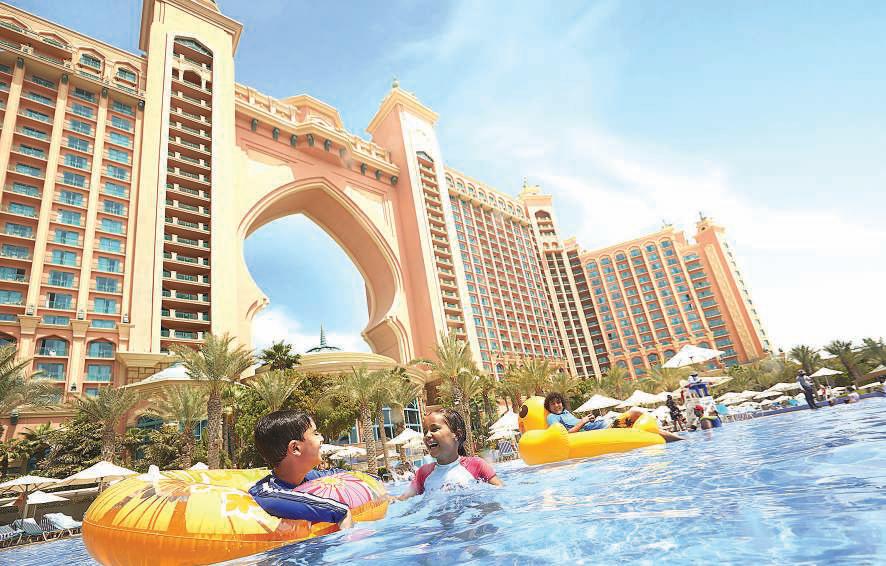
For decades, Dubai sold the world something more valuable than luxury hotels, shopping malls and artificial islands. It sold confidence.
Visitors could fly through its international airport, conduct business across continents, spend holidays in its hotels and enjoy a cosmopolitan city that appeared remarkably insulated from the political instability surrounding the Gulf. Its location in a volatile region was turned into an economic advantage: Dubai became the place where the world could meet without having to confront the region's conflicts.
That proposition is now being tested.
The 2026 regional conflict involving the United States and Iran disrupted aviation across the Gulf, forced airlines to reconsider routes and unsettled international travellers. Dubai's tourism industry experienced a sharp decline in demand, exposing the vulnerability of an economy that depends heavily on international visitors, global business travel and its position as a major aviation hub.
The emirate has responded with financial support, tourism campaigns, restored flight connections and an aggressive effort to attract visitors ahead of the winter season.
There are signs that the strategy is working. But the recovery raises a more important question: can Dubai restore the international confidence that made it one of the world's most successful tourism destinations, or has the crisis exposed a structural weakness in its economic model?
The Numbers Reveal How Quickly Dubai's Tourism Industry Was Disrupted
Dubai entered 2026 after a record-breaking year.
The emirate welcomed approximately 19.6 million international overnight visitors in 2025, reinforcing its position among the world's leading tourism destinations. The industry had been preparing for another year of growth, with expectations that visitor numbers could reach 20 million.
Then the regional conflict changed the outlook.
Dubai's hotel occupancy reportedly fell to an average of 36 per cent in March 2026, with some hotels experiencing occupancy in single digits during the worst period. The decline was particularly damaging because Dubai's tourism economy depends on continuous international movement rather than a large domestic visitor market.
By August, however, the figures had improved. Dubai welcomed approximately 869,000 international overnight visitors during the month, its strongest monthly performance since the conflict began. Hotel occupancy reached 66 per cent, recovering from March's 36 per cent and reaching approximately 89 per cent of the level recorded in August 2025.
Yet the cumulative figures reveal the scale of the disruption. Dubai received 6.97 million international visitors between January and August 2026. That is a substantial number, but it also reflects the interruption to a tourism industry that had been targeting another record year.
The distinction between recovery and normality matters. A hotel returning to 66 per cent occupancy is performing considerably better than one operating at 20 per cent. But it is not necessarily experiencing the same profitability, pricing power or booking confidence it enjoyed before the crisis.
The recovery is real. The question is how durable it will be.
Dubai's First Priority Is Restoring the International Travel Network
Dubai's tourism model cannot function at full capacity without aviation.
Its airport and airline infrastructure connect Europe, Asia, Africa and the Americas. International visitors do not necessarily travel to Dubai alone; many use the city as a stopover, business connection or gateway to other destinations.
When regional airspace becomes uncertain, the consequences extend beyond cancelled holidays. Airlines must reroute aircraft, reconsider schedules, manage insurance costs and assess the safety of operating through the region.
Dubai has therefore prioritised the restoration of international flight connectivity.
Emirates carried 8.7 million passengers in July and August, compared with 4.7 million in March and April. By September, the airline reported that it had restored approximately 93 per cent of its pre-conflict capacity and 98 per cent of its route network.
Flydubai was also rebuilding its operations, serving more than 125 destinations across 56 countries while reporting that it had restored approximately 85 per cent of its network.
These developments are important because airline recovery creates the conditions for tourism recovery. More flights mean more available seats, easier connections and greater opportunities for international visitors to return.
But there is a complication: the return of Gulf-based airlines does not necessarily mean that every international carrier has restored its previous services.
Reuters reported in September that some European airlines had yet to resume their full operations in the region. This matters because tourism confidence depends not only on whether a destination is technically accessible but also on whether travellers have convenient alternatives, reliable schedules and confidence that they can complete their journeys.
Dubai can restore its own aviation network, but it cannot independently determine how every foreign airline assesses regional risk.
Turning Residents Into Tourism Ambassadors
Dubai is also using a less conventional strategy: mobilising its expatriate population to attract international visitors.
The initiative, known as A Dubai Invite, encourages residents to invite friends and relatives from overseas. Qualifying participants can receive benefits worth up to AED 3,000, approximately $816, to encourage visits.
The strategy reflects a recognition that traditional tourism advertising may not be enough after a security-related shock.
A television advertisement can show Dubai's beaches, hotels and skyscrapers. But a personal invitation from a relative or friend who lives in the city can offer something different: reassurance from someone with direct experience of daily life there.
This is particularly relevant to Dubai because of its international population. Residents maintain family, business and social connections across Europe, Asia, Africa and the wider Middle East. The government is effectively using those networks as an additional channel for attracting visitors.
The campaign also helps the city target repeat visitors, a segment that can be especially valuable during a period when some first-time travellers remain uncertain about the destination.
The strategy does not eliminate geopolitical risk. But it attempts to address the perception problem by showing prospective visitors that Dubai remains operational and welcoming.
The Government Is Betting on Events and the Winter Tourism Season
Dubai is not waiting for the international tourism market to recover by itself.
Its strategy includes international exhibitions, business conferences, sporting competitions, entertainment events and the winter holiday season. More than 100 exhibitions were scheduled for the final four months of 2026, according to tourism officials.
The Arabian Travel Market, which took place in September, was particularly significant. The event brought together tourism authorities, airlines, hotel operators, travel agencies and international industry representatives.
Its importance extended beyond the immediate economic activity generated by attendees. It was also an opportunity to communicate that Dubai remained open to international business and tourism.
The winter season is especially important. Dubai's climate attracts visitors escaping colder conditions in Europe and other parts of the northern hemisphere. The period also coincides with holidays, international events and increased demand for outdoor entertainment.
If Dubai can restore bookings during this period, it could establish a stronger foundation for 2027.
However, events can stimulate demand without necessarily restoring confidence across the wider travel market. A successful exhibition does not prove that international holidaymakers have returned in the same numbers or that hotels have regained their previous pricing power.
The industry will need sustained bookings, not just a successful events calendar.
The Real Problem Is Confidence, Not the Availability of Hotels
Dubai has the infrastructure to accommodate millions of visitors. It has international airports, a large hotel inventory, shopping centres, restaurants, beaches, entertainment attractions and an established hospitality industry.
Its problem is that these assets depend on a promise: visitors must believe they can travel to the city, enjoy their stay and return home without facing unexpected disruption.
The regional conflict challenged that promise.
For a traveller planning a holiday months in advance, the question is no longer simply whether a hotel is available. It is whether flights will operate normally, whether airspace will remain accessible, whether travel insurance will cover potential disruptions and whether government travel advisories will change before departure.
These concerns influence decisions even when the destination itself remains operational.
Dubai's official travel update, published on October 30, says that hotels, attractions, restaurants, retail and transport networks are operating across the city. It also confirms that Dubai's airports are open and operational.
That is an important reassurance from the authorities, but official statements cannot entirely determine international perceptions. Travellers also consider advice from their own governments, airline decisions, insurance conditions and the wider regional security situation.
This is where Dubai faces its most difficult challenge.
It can control its tourism campaigns, infrastructure investment and domestic coordination. It cannot control the political decisions of regional powers or guarantee that geopolitical tensions will not escalate again.
The recovery therefore depends partly on developments outside the emirate's influence.
Dubai Has Recovered From Crises Before. But This One Is Different
Dubai's history offers reasons to believe that it can recover.
The 2008 global financial crisis exposed the risks associated with its property-led development model. The city experienced a major real estate downturn and required financial support from Abu Dhabi. Yet it continued investing in infrastructure, tourism and international connectivity.
The COVID-19 pandemic created another severe shock. International travel collapsed, hotels faced unprecedented disruption and aviation was brought to a near standstill.
Dubai responded by reopening its economy to international visitors, maintaining its international transport links and positioning itself as a destination for business, tourism and remote workers. Its tourism industry eventually recovered and went on to record new visitor highs.
But the 2026 crisis is different in an important respect.
The financial crisis was fundamentally an economic and debt problem. COVID-19 was a global public-health emergency. The current challenge involves regional security and the reliability of the Gulf as an international travel corridor.
Dubai's previous recoveries depended heavily on restoring economic activity and reopening international movement. This time, even if the city's hotels and airports operate normally, the wider geopolitical environment can continue influencing decisions made by foreign airlines, governments, insurers and travellers.
The city can rebuild its tourism infrastructure and stimulate demand. Restoring confidence in the wider region is considerably more complicated.
Can Dubai Return to Its Previous Tourism Growth?
There are reasons for cautious optimism.
Dubai retains several advantages that are difficult for competing destinations to replicate. Its aviation network, international population, hospitality infrastructure, business environment and established global brand give it a substantial foundation for recovery.
Its ability to mobilise government institutions and private businesses also provides an advantage. Financial support can help hotels and tourism companies survive temporary declines, while coordinated campaigns can stimulate demand when conditions improve.
But the recovery must be judged by more than the number of visitors entering the city.
Three indicators will be particularly important.
First, international airline participation. The return of foreign carriers and the restoration of their schedules will indicate whether the wider aviation industry considers the regional environment sufficiently predictable.
Second, hotel profitability. Occupancy figures can improve because hotels reduce prices. A sustainable recovery requires stronger demand without excessive discounting and a return of healthy operating margins.
Third, repeat visitor confidence. Dubai needs travellers to return because they genuinely want to visit, not simply because promotions have made the destination temporarily cheaper. Repeat bookings, longer stays and renewed business travel would provide stronger evidence of a durable recovery.
There are also reasons not to assume that recovery will be immediate. Reuters reported in September that Emaar's Dubai hotels had returned to approximately 60 per cent occupancy, compared with 83 per cent before the conflict and 20–25 per cent during it. Its chairman expected a return towards normal occupancy levels within 12 months, supported by the restoration of international flights.
Tourism Economics, cited in the same Reuters report, forecast a decline of more than 30 per cent in international travel to Gulf countries in 2026, followed by a rebound in 2027. These are forecasts, not guaranteed outcomes, and they illustrate how much the sector's prospects depend on regional conditions.
Dubai may recover its previous visitor numbers, but that does not automatically mean its economic model will become less exposed to regional instability.
The Bigger Question: Can Dubai Remain an Island of Stability?
Dubai's rise was built on a remarkable proposition. It transformed its geographical position into an international advantage, becoming a meeting point for businesses, tourists, investors and travellers from across the world.
Its success depended on the perception that the city could remain commercially open and internationally connected despite the political tensions of the wider Middle East.
The 2026 conflict has tested that perception.
The government is responding with financial support, airline expansion, tourism incentives and an ambitious events calendar. The improving hotel occupancy and visitor numbers suggest that these efforts are producing results.
But the deeper challenge cannot be solved through marketing alone.
Dubai must demonstrate that it can maintain reliable transport connections, protect the confidence of international travellers and remain a predictable destination even when the surrounding region experiences instability.
The city has rebuilt its tourism industry after financial and public-health crises. It now faces a different test: whether it can preserve the confidence that allowed it to become a global tourism empire in the first place.
Dubai may be able to bring tourists back. Convincing the world that the region is predictable enough for them to keep coming back will be the harder achievement.