Deterrence Gives Way to Diplomacy: Mecca Pact Allies Meet in Tehran as Reports Surface of $1 Billion Saudi Ceasefire Offer to Houthis
Saudi Arabia, Pakistan and Turkey have turned to Tehran in an effort to prevent another regional war, marking a shift from deterrence toward direct diplomacy as unconfirmed reports emerge of a $1 billion Saudi offer to secure a ceasefire with Yemen’s Houthis.
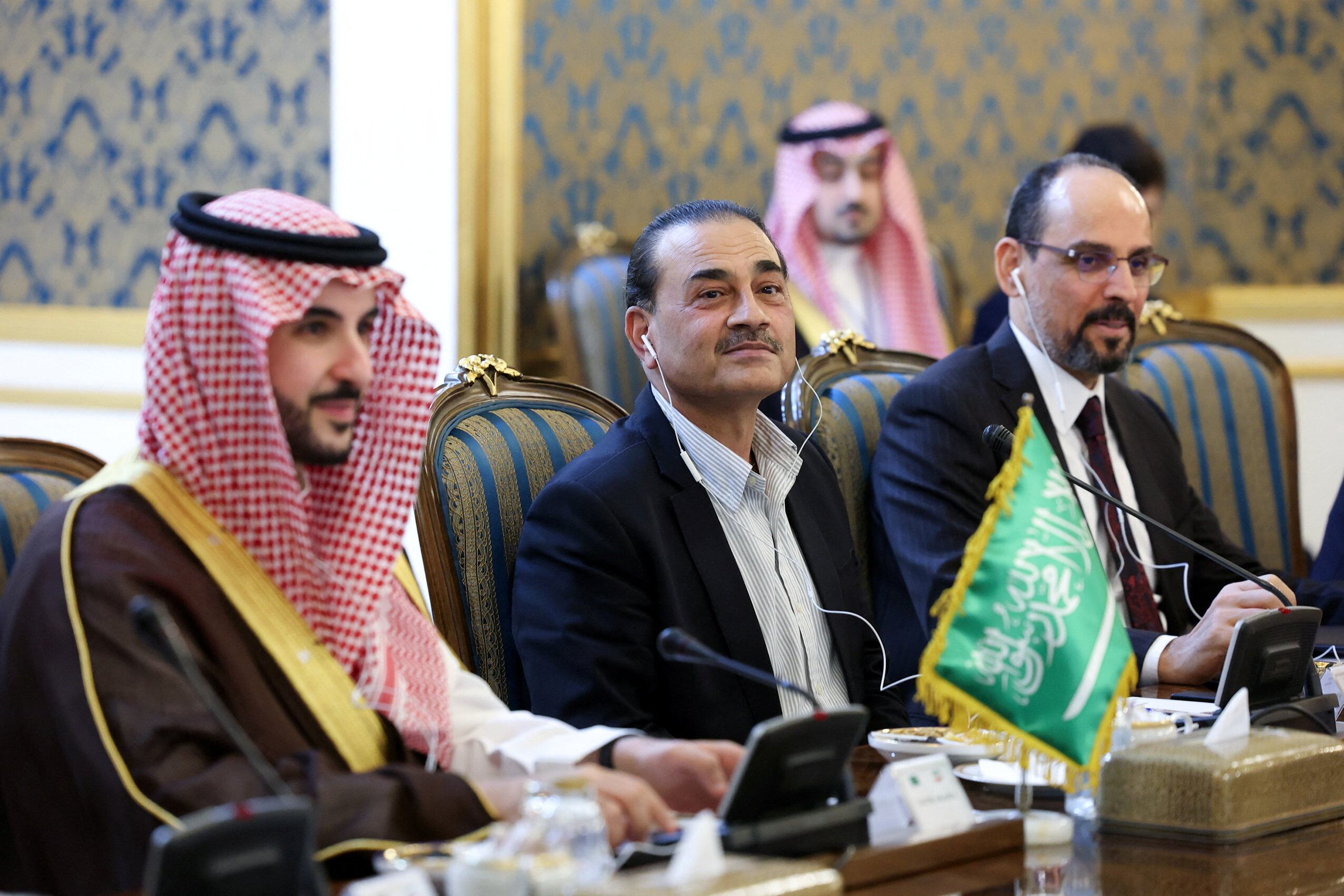
A gathering of senior Saudi, Pakistani and Turkish officials in Tehran has become an unlikely symbol of the region’s changing diplomacy, as governments that once emphasized containing Iran increasingly turn to direct engagement to prevent another wider war. At the same time, unconfirmed reports of a $1 billion Saudi offer to secure a ceasefire with Yemen’s Houthis have added another layer of intrigue to the talks.
Senior defense and intelligence officials from Saudi Arabia, Pakistan and Turkey arrived in Tehran this week for high-level discussions centered on preventing another military escalation in the Middle East.
The meeting is striking not simply because of who attended, but because of where it took place.
The visiting governments have traditionally maintained close security relationships with the United States, while their regional strategies have often been shaped by concerns over Iran’s military power and network of allied armed groups. Now, faced with the possibility of renewed conflict, those same governments appear increasingly willing to engage Tehran directly.
The shift does not necessarily represent a strategic realignment toward Iran. But it does suggest that deterrence alone is no longer seen as sufficient to guarantee regional stability.
For Saudi Arabia in particular, avoiding another cycle of missile attacks, disrupted trade and regional confrontation has become an economic as well as a security priority.
A Diplomatic Victory for Tehran
Whatever ultimately emerges from the talks, their symbolism already benefits Iran.
Hosting senior representatives from Saudi Arabia, Pakistan and Turkey allows Tehran to present itself not as an isolated regional power, but as a government that its neighbors must engage with when the region approaches crisis.
The presence of Pakistani Army Chief Gen. Asim Munir, Saudi Defense Minister Prince Khalid bin Salman and Turkish intelligence chief Ibrahim Kalin would be especially significant in that context. Iranian officials, including Foreign Minister Abbas Araghchi, have sought to frame regional dialogue as an alternative to another round of military confrontation.
For Tehran, the broader message is straightforward: Iran cannot easily be excluded from any regional security arrangement.
For the visiting governments, however, the calculation is likely more pragmatic. Another major conflict involving Iran could threaten energy infrastructure, shipping routes, investment and economic growth across the Gulf.
Saudi Arabia and Turkey therefore have powerful incentives to prevent tensions between Washington and Tehran from again crossing the threshold into open conflict.
The approaching U.S. midterm elections have added to the uncertainty. Regional governments are closely watching what Washington does after the vote, amid speculation that President Donald Trump could again consider military options against Iran.
That possibility makes diplomacy increasingly urgent.
Pakistan Tries to Build a Bridge
Pakistan appears to be playing an especially important role in the diplomatic effort.
Regional reports suggest Gen. Munir arrived in Tehran carrying a proposed framework intended to narrow the differences between Washington and Tehran. Details of any proposal remain unclear, and claims that it has received President Trump’s direct backing should be treated cautiously unless confirmed by the governments involved.
Still, Pakistan is unusually positioned to act as an intermediary.
Islamabad maintains important relationships with Saudi Arabia and other Gulf states while also sharing a long border with Iran. At the same time, Pakistan has strong incentives to prevent another regional conflict that could create economic disruption and instability close to its western frontier.
Iran, meanwhile, has long advocated a regional security system in which Middle Eastern governments play a larger role and dependence on outside military powers is reduced.
That idea has historically faced resistance from Gulf governments that rely heavily on American security guarantees.
But the latest diplomatic activity suggests that some regional capitals may now be more willing to explore arrangements that include direct communication with Tehran—even if they remain far from accepting Iran's broader vision.
Iran’s Leverage Is Not Only Diplomatic
Iran comes to the negotiating table with more than diplomatic arguments.
Its military capabilities and relationships with armed groups across the region have long provided Tehran with leverage well beyond its borders.
That leverage can also produce the opposite effect: Iran’s neighbors have strong reasons to maintain communication with Tehran precisely because a confrontation involving Iran can quickly spill across national borders.
The logic has become particularly important for Gulf states.
Saudi Arabia, the United Arab Emirates and Qatar have spent years trying to diversify their economies, attract foreign investment and establish themselves as global centers for tourism, finance, technology and logistics.
Regional war threatens all of those ambitions.
A missile intercepted over a Gulf city is therefore more than a security event. It can become an economic event, affecting aviation, insurance, investment and perceptions of regional stability.
This helps explain why Gulf governments that remain deeply suspicious of Iranian intentions can nevertheless favor diplomacy with Tehran.
It is not necessarily trust.
It is risk management.
Saudi Arabia’s Most Immediate Problem Is Yemen
For Riyadh, the most urgent issue may lie much closer to home.
Renewed Houthi attacks from Yemen have revived memories of an earlier period when Saudi airports, oil facilities and other infrastructure repeatedly came under missile and drone attack.
Saudi Arabia spent years fighting the Houthis after intervening in Yemen's civil war in 2015. The campaign proved extraordinarily costly and failed to decisively remove the movement from power.
Riyadh has since moved toward a more pragmatic strategy focused on reducing cross-border attacks and finding a political exit from the conflict.
That makes Iran important.
Tehran has long supported the Houthis, although the extent of direct Iranian control over individual Houthi decisions remains disputed. Saudi officials nevertheless view Iran as one of the governments capable of exerting meaningful influence over the movement.
That appears to be one reason Yemen has become central to the latest diplomacy.
The Reported $1 Billion Offer
The most dramatic claim surrounding the Tehran talks is also the one requiring the greatest caution.
Israeli media reports have alleged that Saudi Arabia offered $1 billion to the Houthis in exchange for a ceasefire, potentially with Iran playing an intermediary role in transferring or facilitating the arrangement.
More sensational accounts have gone further, claiming that Saudi Defense Minister Prince Khalid bin Salman personally carried funds to Tehran aboard his aircraft.
Those claims have not been publicly confirmed by Saudi Arabia, Iran or the Houthis, and should therefore not be presented as established fact.
Yet even without confirmation, the reports reflect a broader strategic reality.
Saudi Arabia has little appetite for returning to the type of prolonged military campaign it fought in Yemen during the previous decade.
The Kingdom's priorities have changed.
Under Vision 2030, Riyadh is pouring enormous resources into tourism, infrastructure, technology, entertainment and economic diversification. Projects designed to attract international businesses and millions of visitors depend heavily on perceptions of security.
A renewed missile campaign against Saudi cities would directly threaten that strategy.
From Riyadh's perspective, preventing another conflict may therefore be considerably cheaper than fighting one.
From Fighting Iran to Managing Iran
This is perhaps the most consequential change visible in Tehran.
For much of the previous decade, regional politics revolved around attempts to contain Iranian influence.
Saudi Arabia and Iran backed opposing sides in regional conflicts. Diplomatic relations collapsed. Yemen became a devastating proxy battleground. Gulf governments strengthened their military relationships with Washington.
Today, the competition has not disappeared.
But the strategy is changing.
Saudi Arabia restored diplomatic relations with Iran in 2023. Gulf states have subsequently maintained channels with Tehran even during periods of intense regional confrontation.
The emerging approach could be described less as reconciliation than managed rivalry.
Saudi Arabia does not need to trust Iran to conclude that talking to Tehran is preferable to another missile exchange.
Iran does not need to abandon its regional ambitions to recognize the economic and strategic value of better relations with its Gulf neighbors.
Turkey can maintain its NATO membership while communicating with Tehran.
Pakistan can maintain close relations with Saudi Arabia while simultaneously acting as an intermediary with Iran.
Regional diplomacy is becoming more transactional.
Washington Remains the Missing Piece
There is, however, a limit to what regional governments can accomplish on their own.
The central confrontation remains between Iran and the United States.
Saudi Arabia, Turkey, Pakistan, Qatar and other regional governments can carry messages, propose compromises and encourage restraint. They cannot by themselves resolve the disputes over Iran's nuclear program, sanctions, regional military activities and the presence of U.S. forces in the Middle East.
That is why the real significance of the Tehran meeting may depend on what happens in Washington after the U.S. midterm elections.
If the United States and Iran return to escalation, regional governments could once again find themselves trying to contain a conflict they did not start but cannot escape.
If diplomacy gains momentum, however, the Tehran talks could become part of a broader regional effort to construct a more durable arrangement.
A Ceasefire Is Not the Same as Peace
For now, diplomacy appears to have gained space.
That alone matters.
Every additional channel between Riyadh and Tehran, Ankara and Tehran, or Islamabad and Tehran reduces the possibility that a misunderstanding automatically becomes a military confrontation.
But preventing the next attack is different from resolving the underlying conflict.
Iran and Saudi Arabia still compete for regional influence. The Houthis remain a powerful armed movement in Yemen. Washington and Tehran remain divided over fundamental security questions. Israel remains deeply concerned about Iranian military capabilities. And Gulf governments continue to rely heavily on American security guarantees.
None of those contradictions disappeared because officials sat around the same table in Tehran.
The more interesting change is that governments that once believed security depended primarily on deterring Iran are increasingly concluding that it also requires talking to Iran.
That is a subtle but important shift.
For Saudi Arabia, diplomacy may offer a way to protect its cities and its economic transformation. For Pakistan and Turkey, mediation provides influence while reducing the risk of another destabilizing regional war. For Iran, simply hosting the discussions reinforces its argument that regional security cannot be constructed without it.
Whether the Tehran meeting produces a lasting settlement remains uncertain.
But the image itself carries a message.
After years in which military deterrence defined much of the region's politics, some of the Middle East's most powerful governments are discovering that avoiding the next war may require sitting down with the country they spent years preparing to deter.