Chicago's Unusually Warm November: What Is Happening to America's Changing Seasons?
Chicago entered November with temperatures well above seasonal averages after recording its sixth-warmest October on record. As unusually mild conditions continue across the city, the changing pattern raises a wider question about how climate change is reshaping the seasons in America's major cities.
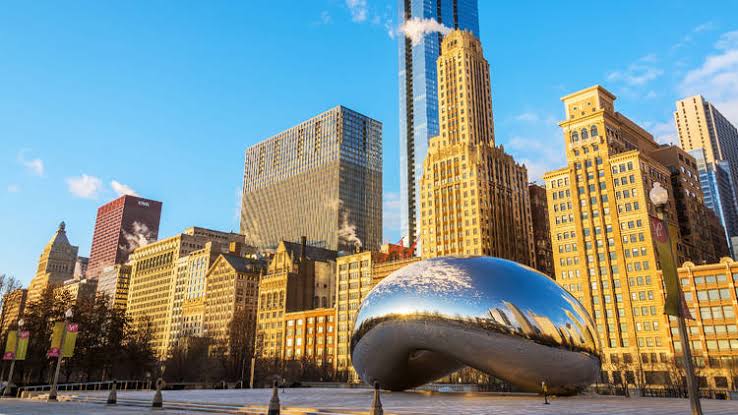
Chicago is approaching November with weather that feels more like the beginning of autumn than the arrival of winter.
The American city, famous for its freezing winters and powerful winds, began November 2026 with temperatures significantly above seasonal averages. October finished as the sixth-warmest October on record, according to local meteorological reporting, while forecasts indicated that the first days of November would remain unusually mild.
For a city where winter is part of its identity, the conditions are attracting attention beyond the daily weather forecast.
On November 2, the National Weather Service recorded a high of 60°F (16°C) at Chicago O'Hare International Airport, five degrees above the long-term daily average. The following day was forecast to reach the low 70s Fahrenheit (around 22°C), considerably warmer than the normal early-November high.
The immediate explanation involves atmospheric circulation and the movement of warmer air into the Midwest. But the broader context is a changing climate in which unusually warm periods are becoming an increasingly important feature of seasonal weather.
Chicago's Winter Is Not Arriving on Schedule
Chicago's reputation as one of America's coldest major cities is built on experience. Its winters can bring freezing temperatures, heavy snowfall, icy winds and dangerous wind chills.
November traditionally marks the transition towards winter. Temperatures decline, daylight becomes shorter and the first significant cold-air outbreaks become increasingly likely.
This year, however, the transition has been unusually warm.
FOX 32 Chicago reported that October 2026 was the city's sixth-warmest October on record, with only two days recording temperatures below normal. The month also finished nearly an inch below normal rainfall.
The National Weather Service's November 2 climate report provides another indication of the unusual conditions. Chicago O'Hare recorded an average temperature of 58°F that day, compared with a historical daily average of 47°F.
The difference is significant, although one warm day cannot establish a long-term climate trend.
The distinction between weather and climate is important. Weather describes atmospheric conditions over hours and days. Climate describes patterns measured over decades.
Chicago experiencing a warm November does not mean winter has disappeared. Cold outbreaks can still arrive, and a warm start to the month does not rule out heavy snowfall later in the season.
But repeated unusually warm periods are part of the wider climate question facing the United States.
Why Is Chicago Experiencing Unusually Warm Weather?
The immediate explanation is atmospheric circulation.
Weather systems move air masses across North America. When southerly winds transport warmer air into the Midwest, temperatures can rise well above what is normally expected for November.
That is what local forecasts were describing at the beginning of the month. Strong southerly winds were bringing warmer air into the Chicago region, with temperatures expected to reach the low 70s on November 3.
Rain and gusty winds were also forecast as the weather system moved through the region.
These conditions are not unusual in isolation. The Midwest can experience warm spells during autumn, particularly when weather systems draw warmer air northward from the southern United States.
The larger issue is how rising global temperatures influence the background conditions in which these weather systems operate.
According to the US National Oceanic and Atmospheric Administration, the United States has experienced a long-term warming trend, although the scale and timing of temperature changes differ between regions and seasons.
A warmer climate increases the likelihood of unusually warm conditions compared with the historical climate. It does not mean every November will be warm or that cold weather will disappear.
What Climate Change Means for Chicago's Winters
The consequences of warmer winters extend beyond whether residents need heavier coats.
Chicago's economy, infrastructure and public services are adapted to a climate that historically includes prolonged periods of freezing temperatures.
Warmer winters can influence several areas.
Energy consumption: Milder periods can reduce demand for heating, although sudden cold spells can still produce substantial energy demand.
Snow and ice: Warmer temperatures can change the balance between snowfall and rainfall. However, precipitation depends on atmospheric moisture and storm conditions, so a warmer winter does not automatically mean less precipitation everywhere.
Roads and infrastructure: Repeated freezing and thawing can damage roads, pavements and other infrastructure. The timing and frequency of temperature changes matter, not just the average temperature.
Ecosystems: Warmer conditions can affect plant development, insect activity and the timing of seasonal changes. These shifts can have consequences for urban vegetation and surrounding ecosystems.
For Chicago, these are long-term planning questions rather than consequences that can be attributed to one unusually warm November.
A Warmer November Does Not Mean the End of Chicago's Winter
There is a danger in treating every unusual weather event as direct proof of climate change.
Chicago can still experience severe winter weather even as its long-term average temperatures rise. A warmer climate changes probabilities and patterns; it does not eliminate natural atmospheric variability.
The city can experience a mild November followed by a severe cold outbreak in December or January.
That is why climate scientists examine decades of temperature records rather than individual forecasts.
The more meaningful question is whether unusually warm conditions are becoming more frequent, how quickly average winter temperatures are changing and what those trends mean for the region's infrastructure and population.
Chicago's current conditions provide a timely illustration of that question, but they are not sufficient evidence on their own to establish the cause of a particular weather event.
The Bigger Picture: America's Changing Seasons
Chicago is part of a wider conversation about how climate change is affecting seasonal patterns across the United States.
Warmer autumns and winters can influence agriculture, energy systems, water management and public health. They can also change how cities prepare for extreme weather.
The Midwest faces a particularly complicated challenge because warming temperatures do not eliminate the region's exposure to heavy rainfall, flooding, winter storms or sudden cold outbreaks.
Climate adaptation therefore requires more than preparing for higher temperatures. Cities must plan for changing precipitation patterns, infrastructure stress and the possibility of extreme weather occurring within an increasingly warmer climate.
Chicago's unusually warm start to November is a reminder that the traditional boundaries between seasons are not necessarily behaving as they once did.
The city may still experience the freezing temperatures for which it is famous. But the long-term question is whether its winters will increasingly become warmer, shorter or more unpredictable.
For a city whose identity has long been shaped by winter, that is a significant change worth watching.
FAA ground stop: the air traffic network that failed is one the FAA said in August could no longer cope
 Essay