Anthropic’s IPO Could Change the AI Industry Forever
The company behind Claude is taking its AI ambitions to Wall Street. Its public-market debut could become a defining test of whether investors believe the artificial-intelligence revolution can generate profits large enough to justify its extraordinary costs.
There is a moment in every technological revolution when an industry has to answer to the public markets.
For artificial intelligence, that moment may be arriving with Anthropic.
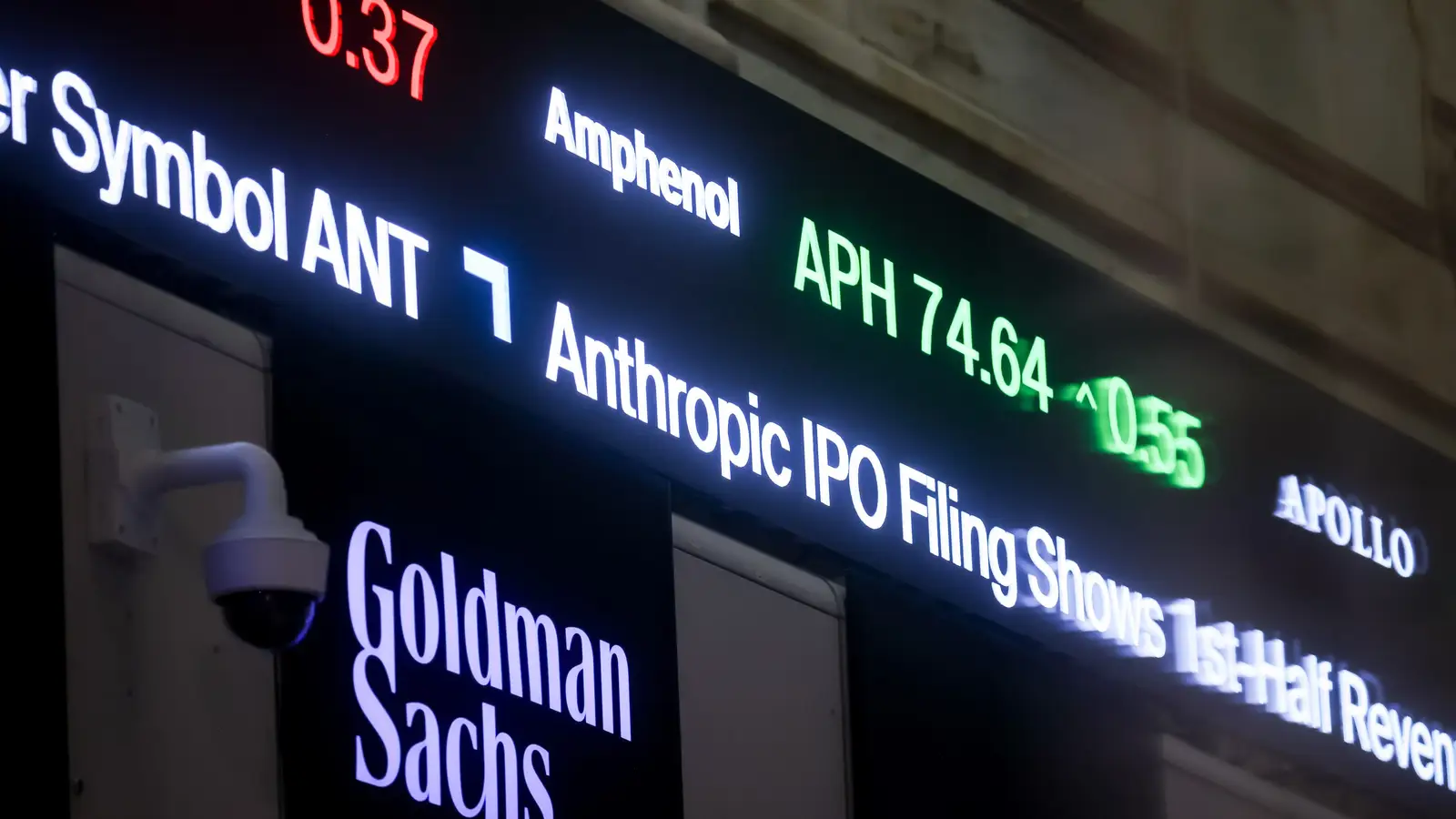
The company behind Claude publicly filed for an initial public offering on October 26, setting the stage for what could become one of the largest technology listings in history. Anthropic plans to trade on Nasdaq under the ticker ANT, although it has not yet disclosed the number of shares it will sell, the offering price or its final valuation.
Those missing numbers are important.
Reports have suggested that Anthropic could seek a valuation between roughly $1.5 trillion and $2 trillion and potentially raise as much as $100 billion. None of those figures is final. But even the possibility illustrates the scale of the bet now being placed on artificial intelligence.
Anthropic's IPO is therefore about much more than one company going public.
It could establish how Wall Street values the entire AI industry.
And in that respect, there is another company whose recent IPO provides an unusually useful comparison: SpaceX.
The numbers behind the AI boom
Anthropic's financial figures explain why investors are excited — and why they should also be cautious.
The company generated $16.3 billion in revenue during the first half of 2026, approximately 14 times its revenue during the same period a year earlier. Revenue growth in the June quarter was even more dramatic, increasing 1,368% year over year.
Those are numbers normally associated with a tiny startup, not a company approaching trillion-dollar status.
But Anthropic's expenses reveal the other side of the AI business.
The company has committed more than $600 billion to computing deals, while infrastructure and computing have become central components of its cost structure. Its first-half net loss was reported at $80.7 billion, although roughly $72.4 billion of that came from a non-cash accounting charge related to financing arrangements. Its adjusted operating picture is considerably healthier, with adjusted operating income turning positive in the first half.
That distinction matters.
Anthropic is not simply a company losing tens of billions of dollars selling an unpopular product.
It is a rapidly growing business spending extraordinary amounts of money to secure the computing capacity it believes will be necessary to compete at the frontier of AI.
That creates the central question for investors:
How much future profit can justify today's enormous infrastructure spending?
AI is becoming an infrastructure business
The traditional technology story was built around software.
Software companies could often grow extraordinarily quickly without spending anything close to their revenue on factories, raw materials or physical infrastructure.
AI is different.
A company such as Anthropic needs enormous quantities of advanced computing power to train models. It also needs continuing access to processors and data centres when customers use those models.
The result is an unusual business model in which something that looks like software to the customer requires an industrial-scale infrastructure system underneath it.
That is why Anthropic's IPO could become a turning point.
Public investors will be able to examine how much revenue the company generates from AI and compare it with how much it must spend to produce that AI.
The question will no longer be simply whether people want Claude.
It will be whether AI intelligence can become a sufficiently profitable commodity to support the infrastructure required to produce it.
The SpaceX comparison
This is where SpaceX offers a fascinating parallel.
In June 2026, SpaceX priced its IPO at $135 a share, raising approximately $75 billion and valuing the company at about $1.77 trillion. It became the largest U.S. IPO on record.
Anthropic now has the potential to challenge that record.
But the more interesting comparison is not the size of their IPOs.
It is the economic model behind them.
Both companies are asking investors to finance enormous infrastructure requirements today because they believe that infrastructure will give them a dominant position in tomorrow's economy.
SpaceX needs rockets, satellites, launch facilities and communications infrastructure.
Anthropic needs computing power, chips, data centres and electricity.
Both are extraordinarily capital-intensive technology businesses pursuing markets that could eventually become enormous.
And both are asking investors to look beyond today's profits and place a value on the future.
Two bets on the future
SpaceX's story is relatively easy to understand.
Its Starlink business already provides satellite internet to millions of customers across 164 markets, while the company's launch operation has become a dominant force in the commercial space industry. Starlink currently accounts for most of SpaceX's revenue.
The company's valuation therefore rests partly on businesses that already exist and partly on much larger opportunities it believes it can capture.
Anthropic's proposition is similar, but its future market is potentially much broader.
If AI becomes a basic layer of the global economy, companies could eventually depend on AI systems for software development, financial analysis, scientific research, customer service, legal work, medicine, logistics and countless other activities.
The potential market is therefore not simply "chatbots."
It is human knowledge and cognitive work.
That is the enormous prize investors are being asked to consider.
But there is a crucial difference
The SpaceX comparison also exposes one of Anthropic's biggest challenges.
SpaceX owns physical infrastructure that is difficult and expensive to reproduce.
Its rockets, launch facilities, satellites and network have taken years and billions of dollars to develop.
Anthropic's competitive advantage is more complicated.
Its models compete against OpenAI, Google and other AI developers. Customers can potentially use several models simultaneously. Open-source models can put pressure on prices. And the pace of technological change means today's leading model may not remain the leader tomorrow.
Anthropic itself identifies Google and OpenAI among its primary competitors while warning investors about dependence on a relatively small group of cloud and hardware suppliers.
That creates a fundamental investment question.
Will AI companies eventually own durable economic moats, or will increasingly powerful models become interchangeable?
If the latter happens, extraordinary computing costs could become a problem rather than an advantage.
Wall Street gets to decide
This is the significance of taking Anthropic public.
Private markets can sustain enormous valuations for years.
Public markets are less forgiving.
Once Anthropic begins reporting quarterly results, investors will have to assess revenue growth, margins, capital expenditure, cash flow and infrastructure commitments.
Every major investment decision will become visible.
If Anthropic says it needs another $50 billion to expand computing capacity, shareholders will have to decide whether that spending represents an investment in future growth or simply an expensive arms race.
That could change the behaviour of the entire AI industry.
If investors reward Anthropic with a huge valuation, other AI companies will have an incentive to continue spending aggressively.
If investors punish the company for excessive capital expenditure, the opposite could happen.
AI companies could become more conservative.
Private investors could demand stronger evidence of profitability.
Infrastructure suppliers could face greater scrutiny.
And the era of seemingly unlimited AI spending could begin to look very different.
The SpaceX lesson
SpaceX's IPO offers another important lesson.
Investors do not necessarily need a company to be profitable today if they believe it is building something that competitors will struggle to replicate.
SpaceX's $1.77 trillion valuation reflected expectations about Starlink, launch services, space infrastructure and AI — not simply its historical earnings. Reuters noted that SpaceX had lost money in the previous year despite its extraordinary valuation.
That is a powerful precedent for Anthropic.
A company can command an enormous valuation when investors believe its future market will be vastly larger than its current business.
But there is a danger.
The fact that an industry will transform the world does not automatically mean every company in that industry will become extraordinarily profitable.
The internet transformed global commerce.
That did not mean every internet company deserved a billion-dollar valuation.
Space exploration may become a massive industry.
That does not mean every space company will succeed.
And artificial intelligence can fundamentally change the global economy without every AI laboratory becoming a trillion-dollar business.
The real AI arms race is capital
Anthropic's IPO therefore reveals something increasingly important about the AI competition.
The race is no longer only about who has the smartest model.
It is about who can obtain enough capital to build and operate the infrastructure behind that model.
Anthropic's filing shows just how large that requirement has become. The company has described enormous future commitments for computing capacity and expects infrastructure to remain its largest expense.
That means Wall Street is becoming part of the AI arms race.
Public capital can finance data centres.
It can finance processors.
It can finance energy infrastructure.
It can finance acquisitions and recruitment.
And, perhaps most importantly, it can give companies access to money on a scale that traditional venture capital cannot easily match.
The IPO could therefore strengthen Anthropic's position against private competitors.
A new kind of technology company
The deeper story is that companies such as Anthropic and SpaceX are changing what people mean when they talk about a "technology company."
The first generation of internet giants largely sold software and digital advertising.
The new generation is increasingly industrial.
AI requires data centres and electricity.
Space requires rockets, satellites and launch infrastructure.
Semiconductors require enormous fabrication plants.
Electric vehicles require batteries and factories.
Technology is becoming physical again.
That means the next generation of technology giants may look less like traditional software companies and more like industrial conglomerates — except that their products are among the most technologically advanced things humans have ever built.
The trillion-dollar question
Anthropic's IPO will ultimately force investors to answer one question:
How much is the future of artificial intelligence worth?
There is no simple answer.
The company has demonstrated extraordinary demand. Its revenue is growing at a remarkable pace, and hundreds of major businesses are already paying for its technology. The company says approximately 250 customers each generated at least $10 million of revenue over the past year, while its five largest customers account for roughly a quarter of revenue.
But the costs are equally extraordinary.
Anthropic is committing hundreds of billions of dollars to computing infrastructure while competing in a market where technology changes extremely quickly.
That makes the IPO both an opportunity and a test.
Investors are not simply buying a stake in Claude.
They are buying into the proposition that artificial intelligence will become one of the foundational industries of the global economy.
More than an IPO
There is also a geopolitical dimension.
The companies capable of building frontier AI increasingly depend on enormous amounts of capital, computing power, energy and advanced semiconductors.
That puts the AI industry closer to strategic industries such as telecommunications, energy and aerospace than the consumer software companies of the past.
Governments will care about who controls the technology.
Companies will care about who controls the infrastructure.
Investors will care about who captures the profits.
And countries will care about whether they are consumers of AI technology or participants in building it.
For economies outside Silicon Valley, that distinction could become particularly important.
The AI boom is creating demand not only for software but also for electricity, data centres, telecommunications networks, engineering talent and digital infrastructure.
The countries that can provide those inputs could capture part of the economic value even without producing the world's leading AI model.
The next chapter of the AI boom
Anthropic's IPO will not determine whether artificial intelligence succeeds.
AI adoption is already too widespread for that.
But it could determine something almost as important:
how much investors are willing to pay to build the future.
SpaceX has already shown that public markets can place extraordinary value on a company promising to build infrastructure for a new economic frontier.
Anthropic is now making a similar argument for artificial intelligence.
The difference is that AI could reach into almost every industry on Earth.
If investors embrace Anthropic at a valuation approaching $2 trillion, the message will be unmistakable: Wall Street believes the AI economy is still in its early stages and that the companies building its infrastructure deserve enormous amounts of capital.
If investors push back, the consequences could be just as significant.
The AI industry may have to prove that extraordinary revenue growth can eventually become extraordinary profits.
That is why Anthropic's IPO could change the AI industry forever.
It is not merely the moment when an AI company goes public.
It is the moment when one of the world's biggest financial markets gets to put a price on the artificial-intelligence revolution.
And after the extraordinary success of SpaceX's IPO, the question is no longer whether investors will finance ambitious bets on the future.
They already have.
The question is whether they are prepared to finance two different visions of the future at the same time — one reaching for the stars, and the other trying to put intelligence into everything.
FAA ground stop: the air traffic network that failed is one the FAA said in August could no longer cope
 Essay