Algeria Sends Troops Into Niger: The Sahel's Gas Pipeline Rivalry Is Becoming a Security Question
Algeria's first overseas ground deployment since the 1973 Arab-Israeli War marks a significant change in its approach to regional security. With troops now reported inside Niger, a strategic gas pipeline under development, and Morocco advancing a rival Atlantic export corridor with Emirati financial backing, competition over West African energy routes is acquiring a military dimension.
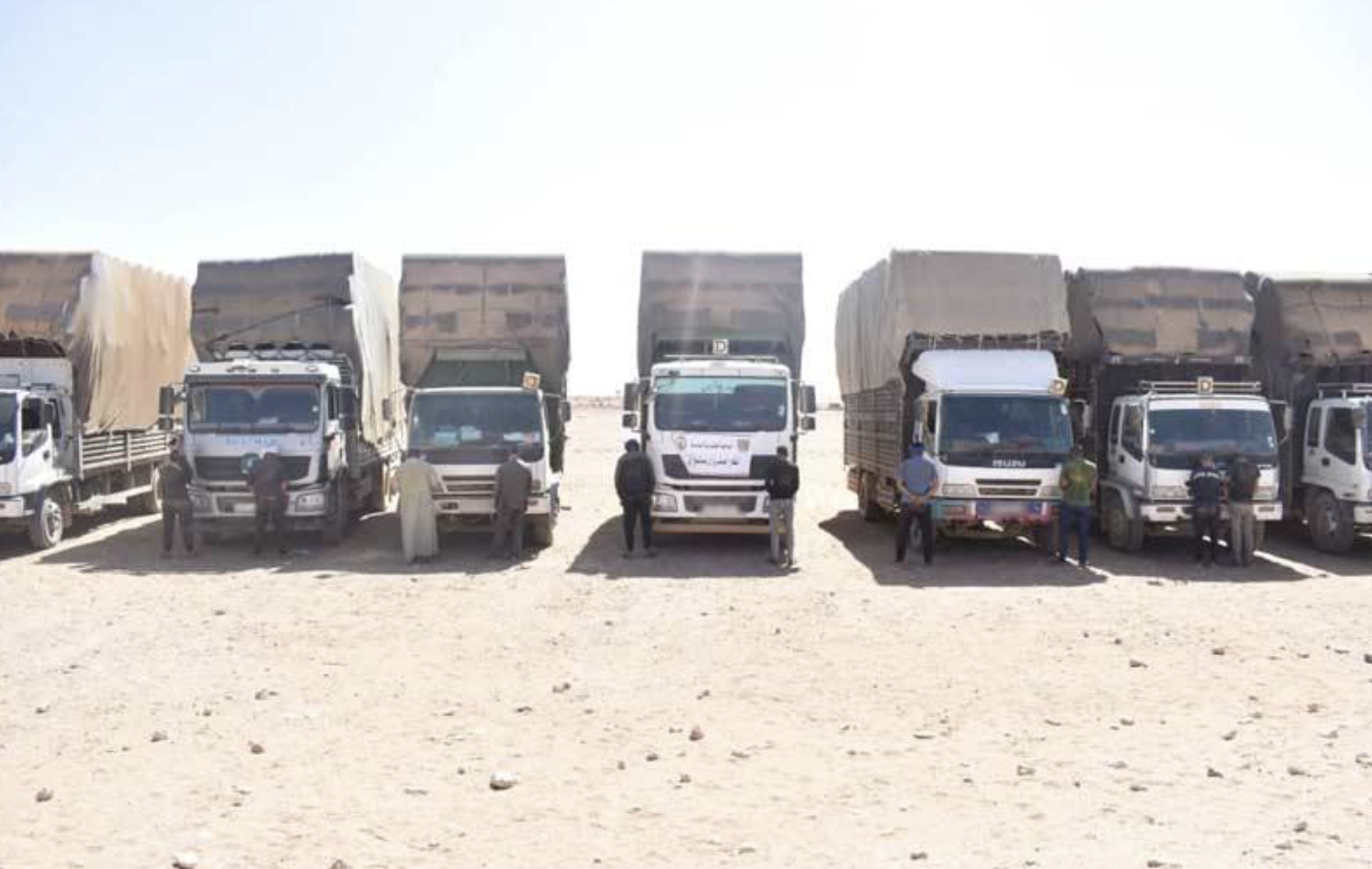
Algeria has crossed a threshold in its regional security policy. An Algerian military convoy has arrived in Niger, marking the country's first overseas ground troop deployment since it sent forces to support Egypt during the 1973 Arab-Israeli War. The development is more than a military movement between neighbouring countries. It places Algeria's energy interests, its relationship with Niger's military government, and its wider competition for influence across the Sahel into a new strategic context.
The deployment follows an October 25 parliamentary approval authorising Algerian National Army units to operate in northern Niger. Algeria's presidency subsequently said the mission was intended to protect shared energy and economic interests. Although authorities have not publicly disclosed the force's size or deployment duration, Reuters reported on October 30 that a convoy had reached Arlit, a uranium-mining town in northwestern Niger, citing ten people familiar with the movement.
The distinction between the authorised deployment location and the reported arrival point matters. Parliament approved the deployment of forces to Madama, near Niger's border with Libya, while the reported convoy reached Arlit. The precise operational arrangements remain unclear.
Nevertheless, the political significance is difficult to separate from Algeria's expanding economic and security interests in Niger.
From non-intervention to protecting strategic interests
Algeria's foreign policy has traditionally emphasised sovereignty, territorial integrity and non-interference in the internal affairs of other states. Its reluctance to send combat forces beyond its borders has been an important feature of its post-independence strategic identity.
That position, however, has never been an absolute prohibition.
A 2020 constitutional revision established a legal framework allowing overseas military deployments with parliamentary approval. The Niger operation represents a significant application of that framework and a departure from decades of restraint.
The change did not emerge overnight. Algeria had already increased its military engagement with Niger following an attempted mutiny against the country's military government in August 2026. Algiers dispatched military aircraft and subsequently strengthened its security cooperation with Niamey. The two governments have also moved to repair relations after a diplomatic dispute involving Algeria's interception of a Malian drone in April 2025.
The new deployment therefore reflects two overlapping priorities: preventing instability from spreading across Algeria's southern frontier and protecting economic interests that increasingly depend on Niger's security.
This distinction is important. Algeria is not simply abandoning non-intervention in favour of regional expansion. It is demonstrating a willingness to use military capabilities abroad when neighbouring instability threatens interests it considers strategically important.
The Trans-Saharan Gas Pipeline gives Algeria a direct economic stake
Energy is central to understanding the deployment.
Algeria's state-owned energy company, Sonatrach, is involved in the Trans-Saharan Gas Pipeline (TSGP), an ambitious project connecting Nigeria's gas-producing regions to Algeria through Niger. From Algeria, the proposed system would connect to existing infrastructure capable of transporting gas towards European and other international markets.
The pipeline is designed to extend approximately 4,000 kilometres, creating an alternative route for Nigerian natural gas to reach international consumers.
The project has moved beyond diplomatic declarations. On June 4, 2026, Sonatrach announced the official launch of construction works on the Algerian section, with representatives from Algeria, Niger and Nigeria attending the ceremony in Aoulef, Adrar.
The Algerian section is expected to follow the Trans-Saharan Road corridor from the Nigerien border towards Hassi R'Mel, an important centre in Algeria's gas transmission system.
Yet the existence of construction activity in Algeria should not be confused with completion of the entire international pipeline. The project still requires substantial infrastructure development, financing, coordination between three governments and security arrangements across its route.
For Algeria, Niger is therefore not merely a neighbouring country. It is a necessary transit partner in a project that could reinforce Algeria's position as a major supplier of natural gas to Europe.
That creates a direct relationship between regional security and energy policy. Instability along the proposed corridor could delay construction, increase costs, threaten personnel and undermine investor confidence.
Protecting energy infrastructure consequently becomes a question of national economic security.
Morocco's Atlantic pipeline presents a competing vision
Algeria's pipeline ambitions are unfolding alongside another major infrastructure initiative: the African Atlantic Gas Pipeline, also known as the Nigeria-Morocco Gas Pipeline.
The project seeks to transport Nigerian natural gas northwards along the West African Atlantic coast, connecting several countries before reaching Morocco and potentially European markets.
Its route offers a fundamentally different geographical approach from Algeria's Trans-Saharan proposal. Rather than moving gas north through Niger and Algeria, it would use the Atlantic coastline to connect West African energy producers with Morocco.
The project has acquired institutional momentum. In July 2026, participating ECOWAS member states signed an intergovernmental agreement, establishing a framework for the next implementation phase. The agreement provides for the creation of a project company headquartered in Casablanca and a governance authority based in Abuja.
The United Arab Emirates has also emerged as an important financial actor. Carnegie Endowment analysis published in 2025 identified Emirati funding support for the Moroccan-backed pipeline as part of the broader competition between Rabat and Algiers over African energy corridors.
The strategic implications extend beyond the commercial transportation of natural gas.
Morocco's Atlantic initiative could strengthen its position as a transit and energy hub connecting West Africa with European markets. Algeria's Trans-Saharan project, meanwhile, could consolidate its existing position as a major gas exporter and strengthen its relationships with Niger and Nigeria.
Both projects are presented as instruments of regional economic integration. Yet their competing geographical routes also reflect the rivalry between two North African powers seeking influence across West Africa.
It would be premature, however, to describe the two projects as an established military confrontation or to suggest that the Moroccan-Emirati partnership caused Algeria's decision to deploy troops. There is no publicly established evidence of such a direct causal connection.
The competition is better understood as a longer-term struggle over infrastructure, investment, transit rights and regional partnerships.
Why Niger has become strategically important
Niger occupies an important geographical position between North Africa and West Africa. It shares borders with Algeria, Libya, Chad, Nigeria, Benin, Burkina Faso and Mali, placing it at the intersection of several security and economic networks.
Its natural resources include uranium, oil and gold, while its location makes it a potential transit country for regional infrastructure projects.
However, the country faces persistent security challenges. Armed groups affiliated with al-Qaeda and Islamic State operate across parts of the Sahel, exploiting porous borders, weak state institutions and local conflicts.
For Algeria, instability in Niger presents risks beyond the immediate threat of militant infiltration. It can also undermine trade, energy investments and the security of infrastructure connecting the Mediterranean-facing north with the resource-producing south.
The security situation is further complicated by the departure of Western military forces and the emergence of new regional security arrangements.
Niger, Mali and Burkina Faso have increasingly pursued independent security partnerships following military coups and deteriorating relations with traditional Western partners. Their Alliance of Sahel States has become an important political and security framework in the region.
Algeria's growing cooperation with Niger's military government must therefore be understood within this changing regional environment.
Algiers is seeking to maintain influence in a region where traditional diplomatic arrangements have weakened and competing external actors are expanding their presence.
The military dimension of energy competition
The most important question is not whether Algeria and Morocco are preparing for a direct military confrontation over pipelines. There is no evidence of that.
The more consequential development is that major energy infrastructure projects are increasingly dependent on security arrangements that extend beyond national borders.
Pipelines require stable transit agreements, protected construction sites, reliable access roads, functioning border controls and long-term political cooperation. In regions affected by insurgencies and political instability, these requirements become strategic vulnerabilities.
Algeria's deployment demonstrates how a government may respond when it considers those vulnerabilities sufficiently important to justify sending military personnel abroad.
Morocco's Atlantic project presents a different set of challenges. Its route passes through numerous coastal and West African states, requiring extensive diplomatic coordination, financing and political commitments. Its July 2026 intergovernmental agreement is an important institutional step, but it does not mean the pipeline is already built or commercially operational.
The two projects are therefore competing infrastructure visions at different stages of development, rather than functioning gas networks fighting for existing market share.
Nevertheless, both illustrate how energy infrastructure can become an instrument of regional influence.
For countries along their proposed routes, the projects offer potential investment, transit revenues, employment and access to energy. They also create opportunities to negotiate with competing regional powers.
This is particularly important for Niger, whose geographical position gives it leverage in determining whether the Trans-Saharan pipeline can progress.
What comes next for the Sahel?
Algeria's deployment raises several questions that will determine whether this is a limited security mission or the beginning of a more sustained military presence in the Sahel.
First, the size and duration of the deployment remain unknown. A limited force protecting designated infrastructure would represent a different commitment from a permanent military presence supporting Niger's broader counterinsurgency operations.
Second, the security relationship between Algiers and Niamey will need to withstand the political and operational difficulties associated with deploying foreign forces in a country governed by a military administration.
Third, the future of the Trans-Saharan Gas Pipeline depends on more than military protection. Financing, construction capacity, cooperation between Nigeria, Niger and Algeria, and the ability to secure the entire transit corridor will remain decisive.
Finally, Morocco's Atlantic pipeline will continue to test whether West African governments can turn regional agreements into an operational infrastructure network. Its development will also shape the diplomatic and economic environment in which Algeria pursues its own ambitions.
For Niger, the central challenge will be maintaining room for manoeuvre between competing regional partners while addressing the security problems that threaten its territory.
For Algeria, the deployment represents a new willingness to connect national security directly to economic infrastructure beyond its borders.
The broader significance is that the Sahel's geopolitical landscape is no longer shaped exclusively by military alliances, counterterrorism operations or the withdrawal of foreign forces. Energy corridors, investment partnerships and infrastructure security are becoming equally important components of regional power.
Algeria has now demonstrated that it is prepared to put soldiers behind at least some of its strategic interests in Niger. Whether that commitment remains limited or expands will help determine how the next phase of competition over West Africa's energy routes unfolds.