America Has Given Trump a New Problem: A Congress He Can No Longer Control
The 2026 midterm elections have transformed Washington. Democrats have captured both chambers of Congress, turning the second half of Donald Trump's presidency into a struggle over accountability, economic performance and political power. But winning control is one thing; convincing frustrated voters that Democrats can govern is another.
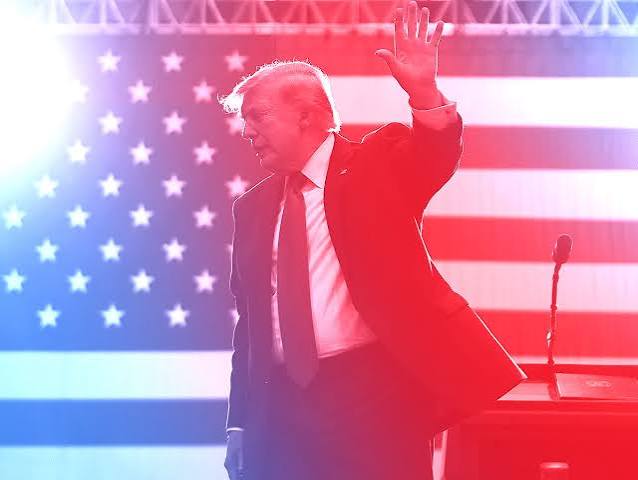
The most consequential message from America's 2026 midterm elections is not simply that Democrats have won. It is that Donald Trump has lost something that has been central to his second presidency: a Congress largely willing to work with him.
In an extraordinary electoral reversal, Democrats captured control of both the House of Representatives and the Senate in Tuesday's elections, making significant gains in states that had supported Trump in 2024. The results represent a major shift in Washington and set the stage for a difficult final two years of his presidency.
But the election raises a question that goes beyond party victories. What happens when a president who has built his political power around controlling the national conversation suddenly faces a legislature controlled by his opponents?
The answer could shape American politics well beyond the remainder of Trump's term.
The scale of the Republican defeat
Democrats' gains were particularly striking because they extended into traditionally Republican territory.
In Texas, Democrat James Talarico won a Senate seat, while Gina Hinojosa defeated Republican Governor Greg Abbott, ending a long period of Republican dominance in the state's statewide political contests.
South Carolina also delivered a historic result. Democrat Annie Andrews won a Senate seat in a state that Trump carried by nearly 18 percentage points in 2024. Kansas elected a Democratic senator for the first time since 1932, when the Great Depression was reshaping American politics.
Democrats also made gains in Ohio, Iowa and other Republican-leaning states. In Georgia, Keisha Lance Bottoms became the first Black woman elected governor in American history.
The results were not confined to the Senate. Democrats gained more than two dozen House seats, according to early projections, securing control of the lower chamber as well.
The scale of the shift suggests that the election was about more than individual candidates. Voters were expressing dissatisfaction with the political direction of the country, including the administration's economic decisions and its handling of international affairs.
Reuters reported that half of voters surveyed in exit polls viewed the election as an opportunity to rebuke Trump. Three-quarters said they were angry or dissatisfied with the direction of the country, while 70% wanted Congress to provide stronger checks and balances on the president.
These figures help explain why the Democratic gains extended beyond the traditional battleground states.
The economy became a political liability
The election also exposed a familiar weakness in American politics: the distance between national economic arguments and the everyday experience of households.
Presidents frequently defend their economic records using indicators such as economic growth, employment and investment. But voters experience the economy through rent, groceries, electricity, fuel, healthcare and the cost of borrowing.
When household expenses remain high, positive economic statistics may not translate into political support.
For Democrats, affordability became a central campaign issue. They attacked Trump's tariff policies, argued that the administration had failed to address the cost of living and connected the economic consequences of the war with Iran to the financial pressures facing American households.
The war was another major factor in the political debate. Trump's decision to attack Iran in February became a source of frustration among voters concerned about the human, financial and geopolitical consequences of prolonged military involvement.
The Republican campaign attempted to focus attention on cultural issues, immigration and Democratic positions on social policy. But the election results suggest that these arguments did not overcome concerns about the economy and the administration's wider direction.
The lesson is important: voters do not necessarily evaluate a government according to the issues that dominate political speeches. They judge it against the problems they encounter in their daily lives.
Trump remains president, but his political power has changed
The midterm elections do not remove Trump from office. The American president serves a fixed four-year term, and congressional elections cannot directly terminate that mandate.
However, control of Congress determines how much of a president's agenda can move through the legislative process.
For the first two years of Trump's second term, Republicans controlled both chambers. That arrangement allowed the administration to advance legislation with relatively little resistance from its own party.
The new Democratic majority changes that relationship.
In the House, Democrats can block legislation, control committees, conduct investigations and issue subpoenas through their congressional authority.
In the Senate, the new majority can obstruct presidential nominations and determine whether many of the administration's legislative priorities advance. It can also influence the confirmation process for federal judges and other senior officials.
The consequences could be significant for an administration that has frequently treated congressional Republican support as an important source of political strength.
Trump has already indicated that he will work with Democrats on certain issues while threatening to veto legislation he considers unacceptable.
That leaves Washington facing a period in which political confrontation could become a defining feature of government.
The election was also a warning about presidential power
American midterm elections serve a purpose beyond selecting members of Congress. They provide voters with an opportunity to adjust the political balance between the executive and legislative branches.
The Constitution deliberately divides power among institutions. Congress makes laws, controls federal spending and oversees the executive branch, while the president administers the federal government.
When one party controls the White House and both chambers of Congress, political accountability can become complicated. Members of the president's party may have limited incentives to challenge an administration with which they share political interests.
The Democratic victories could therefore restore a more confrontational form of congressional oversight.
That does not automatically mean every investigation will produce meaningful accountability or that every Democratic initiative will succeed. Congressional investigations can become politically charged, and legislative disagreement can prevent action on issues that require cooperation.
Nevertheless, the results give Democrats institutional powers they did not previously possess.
The election has effectively moved the centre of political conflict from the campaign trail into Congress.
Democrats have won power. Now comes the difficult part.
There is an important distinction between winning an election by opposing an unpopular president and winning public confidence through governing.
Democrats campaigned on affordability, corruption and the need for stronger checks on the administration. Their success has given them the opportunity to pursue those promises.
But voters will expect more than investigations and political speeches.
They will want answers on housing costs, healthcare, wages, immigration, energy prices and the country's international commitments. They will also expect Democrats to demonstrate that they can offer practical alternatives rather than simply obstruct the president.
The party faces its own internal divisions. Its members do not necessarily share the same economic priorities, foreign policy positions or approach to the Trump administration.
A congressional majority can become politically fragile if its members cannot agree on what they want to achieve.
There is also a risk that Democrats will interpret the result too narrowly. A vote against the president does not necessarily represent unconditional support for the opposition party's entire programme.
Some voters may have supported Democratic candidates because they were dissatisfied with Trump, not because they had embraced every Democratic policy proposal.
That distinction could become crucial as the party begins exercising power.
The road to 2028 begins in Congress
The results have also accelerated the political conversation surrounding the 2028 presidential election.
Trump cannot seek a third presidential term under the Twenty-Second Amendment to the US Constitution. Consequently, the next presidential contest will take place without him as a candidate, although his influence over the Republican Party is likely to remain an important political factor.
For Democrats, the congressional majority provides an opportunity to establish a governing record and develop the political figures who could compete for the party's presidential nomination.
For Republicans, the challenge is more complicated. The party must decide whether to continue defining itself primarily through Trump's political identity or begin preparing for a post-Trump political future.
The midterm results will intensify that debate.
However, neither party can assume that the political conditions of November 2026 will remain unchanged by 2028. Voters can reward one party for providing a check on presidential power and later punish that same party if it fails to deliver results.
America's political system has entered a new phase
The 2026 midterms have not ended Trump's presidency, nor have they settled the ideological divisions that have shaped American politics.
They have, however, changed the institutional environment in which his administration must operate.
For the first two years, Trump governed with a Republican Congress that largely supported his agenda. For the next two, he will face a Democratic-controlled legislature with the power to investigate his administration, block proposals and challenge his political priorities.
That is a substantial change.
But the most important test may not be whether Democrats can make Trump's remaining years more difficult. It will be whether they can use their new authority to address the economic and political frustrations that brought voters to their side.
America's voters have changed the balance of power in Washington. They have not given either party a permanent mandate.
The Republicans have lost control of Congress. The Democrats have gained the responsibility that comes with it.
And for a country increasingly divided over its political future, the next two years will reveal whether a change in congressional power can produce a change in the way Washington governs.
FAA ground stop: the air traffic network that failed is one the FAA said in August could no longer cope
 Essay