Russia, US and Ukraine prepare Abu Dhabi talks without an announced settlement
Putin says trilateral negotiations are due to begin on 10 November, with US and Ukrainian officials also describing preparations. Security arrangements and humanitarian measures are on Washington’s stated agenda, but convening the meeting is not evidence that the parties have narrowed their differences.
Russia, the United States and Ukraine are preparing for negotiations in Abu Dhabi on 10–11 November, with Russian President Vladimir Putin saying on Friday that the trilateral talks should begin on Tuesday. The schedule is supported by US announcements and Ukrainian officials’ accounts of their preparations, not only by a statement from Moscow.
Putin discussed the forthcoming meeting during a 6 November Security Council session, according to the Kremlin’s published transcript. He thanked the United Arab Emirates leadership for its assistance with negotiations and humanitarian exchanges. His remarks confirmed an intended meeting, not an agreement on ending Russia’s war against Ukraine.
The difference matters after months without a US-mediated round. A shared venue and a working date establish a channel for negotiation. They do not establish common terms for a ceasefire, a security arrangement or a political settlement.
What the three sides have confirmed
US envoy Steve Witkoff announced on 2 November that Washington would bring together Ukrainian and Russian delegations in Abu Dhabi on 10–11 November, Reuters reported. Kremlin spokesperson Dmitry Peskov confirmed the dates the following day and named presidential aide Vladimir Medinsky as Russia’s chief negotiator.
Putin’s Friday remarks provide primary confirmation that Moscow was preparing to send participants. Anadolu’s account of the meeting, drawing on Russian state agencies, also identifies Medinsky as delegation leader. The Kremlin transcript itself does not set out a negotiated agenda or announce concessions.
On the Ukrainian side, presidential communications adviser Dmytro Lytvyn told reporters on 6 November that the negotiating group was preparing and that presidential-office head Kyrylo Budanov would attend. Interfax-Ukraine and Ukrinform reported his clarification that Budanov would not lead the delegation, correcting earlier media accounts.
David Arakhamia, who heads President Volodymyr Zelenskyy’s parliamentary group, told the Kyiv Independent that Rustem Umerov would lead Ukraine’s team. The outlet quoted Arakhamia directly and reported Lytvyn saying there had been no change in the leadership arrangements. This is on-the-record Ukrainian confirmation of preparations and personnel, rather than an inference from Russia’s announcement.
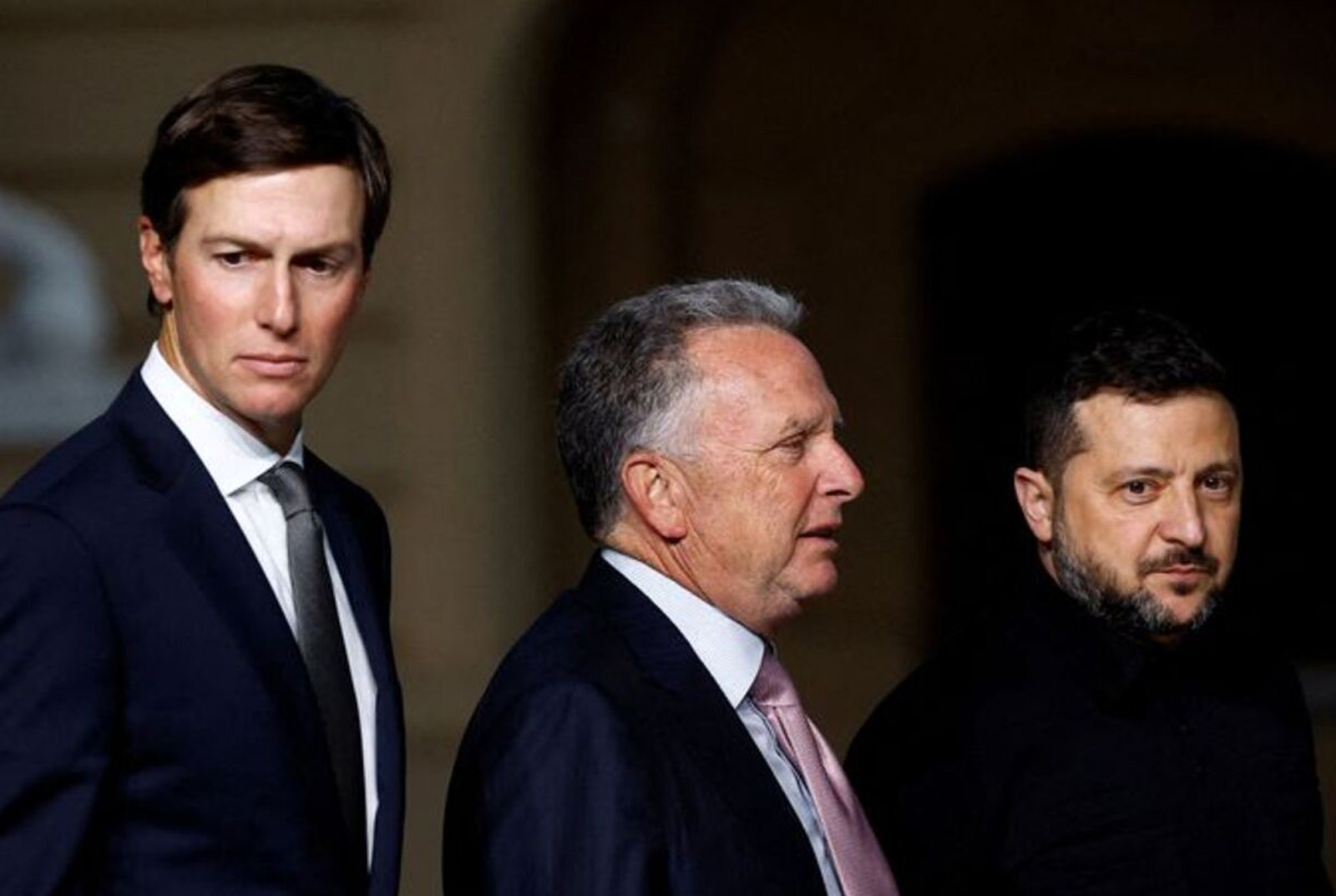
Reuters reported, citing a senior US official, that Witkoff and Jared Kushner were expected to represent Washington. Their attendance was described as expected, not documented by the publication of a final delegation roster. The reporting supports a planned trilateral process while leaving room for practical changes before it begins.
A stated US agenda is not a joint agreement
Witkoff said the discussions would cover post-war security agreements, de-escalation, humanitarian measures and ending the war, according to Reuters’ account of his announcement. Those subjects should be attributed to the US envoy, not presented as a jointly adopted negotiating text.
Arakhamia separately told the Kyiv Independent that Ukraine intended to raise recent Russian attacks with both the US and Russian delegations. Zelenskyy’s official website reported on 6 November that he had discussed preparations with Nordic and Baltic leaders and conveyed proposals for realistic outcomes to the American side. Neither account supplies an agreed list of deliverables.
The distinction between an agenda and an outcome is particularly consequential for security guarantees. Discussing arrangements does not identify their guarantors, obligations or enforcement. Likewise, humanitarian measures can be negotiated without a comprehensive political settlement. The sources examined do not announce agreement on either track.
Reuters reported on 2 November that the last US-mediated peace talks had taken place in February and that Russia and Ukraine remained far apart on possible settlement terms. Budanov also cautioned against expectations of a decisive result, according to Interfax-Ukraine. His warning is consistent with treating the meeting as part of a continuing process, not a final negotiation.
The UAE venue and Europe’s security interests
Putin’s published thanks document the UAE’s facilitation role from Moscow’s perspective, including assistance with humanitarian exchanges. A separate UAE Foreign Ministry readout records a 6 November call between Foreign Minister Abdullah bin Zayed Al Nahyan and Ukrainian counterpart Andrii Sybiha about bilateral relations and peace and security. That readout does not set out the forthcoming talks’ agenda or name a UAE negotiating delegation.
The location should therefore not be made to carry claims the host has not publicly stated in that account. The central subject remains the war in Europe and the conditions under which the fighting might be reduced or ended.
European governments are involved in the surrounding diplomacy even though the announced format is trilateral. Reuters reported planned US working-level consultations with representatives of France, Germany, Britain, the European Union and NATO. Zelenskyy’s official account subsequently referred to preparatory discussions in Brussels involving NATO and Europeans. Consultation is not identical to a seat at the Abu Dhabi table.
Spain’s aid runs alongside diplomacy
Separately, Ukraine’s presidency announced a new €437 million Spanish military-assistance package following Zelenskyy’s 5 November meeting with Prime Minister Pedro Sánchez in Madrid. Interfax-Ukraine reported the figure on 6 November, attributing it to the Ukrainian presidential press service. It is an announced package, not confirmation that all equipment has arrived.
Spain’s own meeting readout reaffirmed support for Ukraine and discussed reconstruction assistance, without specifying the €437 million military figure in the text examined. The two categories should not be conflated, and the package should not be presented as an outcome of talks that have yet to begin.
Abu Dhabi’s first test is whether the delegations meet as planned and can identify verifiable steps beyond another statement of intent. Attendance is now supported by accounts from all three sides. Agreement on the substance remains the unresolved question.