Italy Sends in the Police. But the Bigger Problem May Be What Comes Next
An examination of Italy's response to recent unrest, weighing the state's duty to maintain public order against the persistent economic grievances driving public anger.
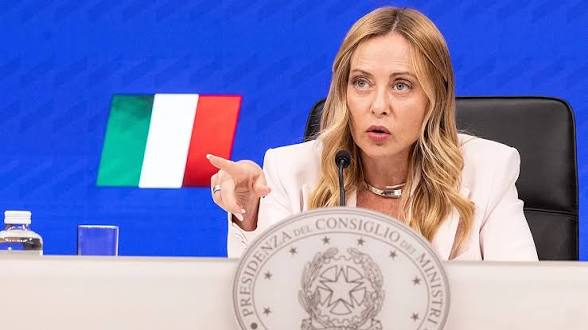
When economic frustration turns into disorder, governments face a fundamental test: should policy focus first on restoring public order, or on addressing the conditions that produced the anger? This question stands at the center of Italy’s recent response to domestic unrest, where demonstrations against economic and social pressures have repeatedly tested the limits of state authority under Prime Minister Giorgia Meloni’s government.
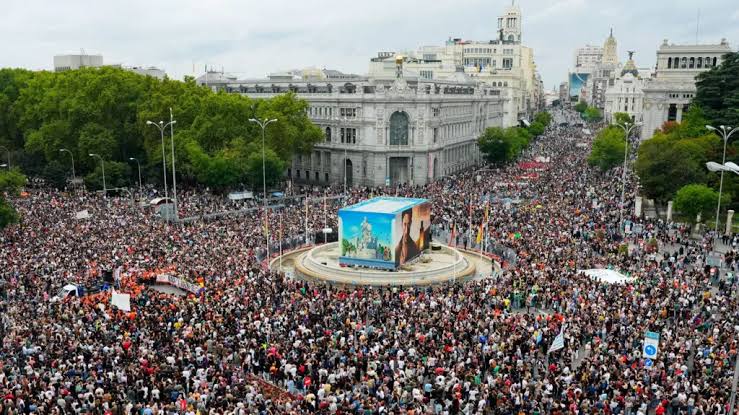
To understand the current trajectory, it is necessary to examine what actually transpired on the ground. Recent demonstrations across various Italian cities brought thousands into the streets to voice frustration over economic pressures, wages, unemployment, housing costs, inflation, inequality, migration tensions, and declining economic security. While the vast majority of participants engaged in peaceful assembly, distinct groups engaged in rioting, looting, and direct attacks on police officers. These actions resulted in property damage, numerous injuries among law enforcement personnel, and subsequent arrests based on official police statements and reporting from outlets such as Reuters, AP, AFP, and ANSA.
In response, the Meloni government implemented a series of rigorous security measures. Official government documents and legislation outline the deployment of police and, where authorized, security personnel, alongside the introduction of new criminal penalties, expanded arrest powers, increased fines, and tighter restrictions on demonstrations. Measures extending to minors and parents have also formed part of the legislative push, reinforcing the administration's law-and-order platform as documented by Italian reporting.
Supporters of the government offer a straightforward and robust defense of these policies. Democratic states carry a binding obligation to protect citizens, local businesses, critical infrastructure, and peaceful protesters from violence and disruption. From this viewpoint, rioting, looting, and assaults on law enforcement cannot and should not be automatically treated as legitimate political protest. Order must be established first so that democratic life can continue safely, and the rule of law requires enforceable consequences for unlawful acts.
Critics raise a different and pressing concern. They argue that Italy is increasingly responding to deep-seated social and economic discontent primarily through policing, criminal law, and restrictive security policies rather than tackling the underlying structural drivers of public anger. Wages, unemployment, housing availability, inflation, and inequality remain persistent challenges for large segments of the population. When governments lean exclusively on police deployment and penal reform, critics contend, they manage the visible symptoms of unrest while leaving the root causes untouched.
This dynamic places Italy within a wider European context. Similar tensions, demonstrations, and robust state responses have unfolded in recent years across France, Belgium, Spain, Germany, and the UK. Across these nations, authorities have frequently confronted public demonstrations with increased police presence and stricter public-order legislation, suggesting a broader continental shift toward treating political and economic unrest primarily as a public-order problem rather than a socioeconomic signal.
An interesting perspective emerges when comparing how unrest is interpreted across different regions. In discussions concerning African countries, Western reporting and international analysis frequently attribute public protests to structural factors such as unemployment, inequality, governance failures, demographic pressure, and economic frustration. When similar demonstrations occur within European capitals, however, the narrative often shifts more rapidly toward framing the events around criminality, public safety, and security management, even as underlying economic pressures share notable similarities. At the same time, important structural differences in state capacity, institutional maturity, and social safety nets separate these contexts.
This tension points toward a larger structural dilemma across modern democracies. What happens when governments become increasingly capable of controlling the visible symptoms of public anger while struggling to resolve the conditions producing it? As Italian courts, police agencies, and legislative bodies continue to navigate the aftermath of recent unrest, the balance between security enforcement and economic reform remains the central unresolved issue.