Is the European Union Falling Apart? The Forces Testing Europe’s Biggest Political Project
Europe’s great experiment in shared sovereignty is not on the verge of disappearing. But political fragmentation, economic weakness, migration disputes and a changing security order are testing whether 27 countries can still act as one.
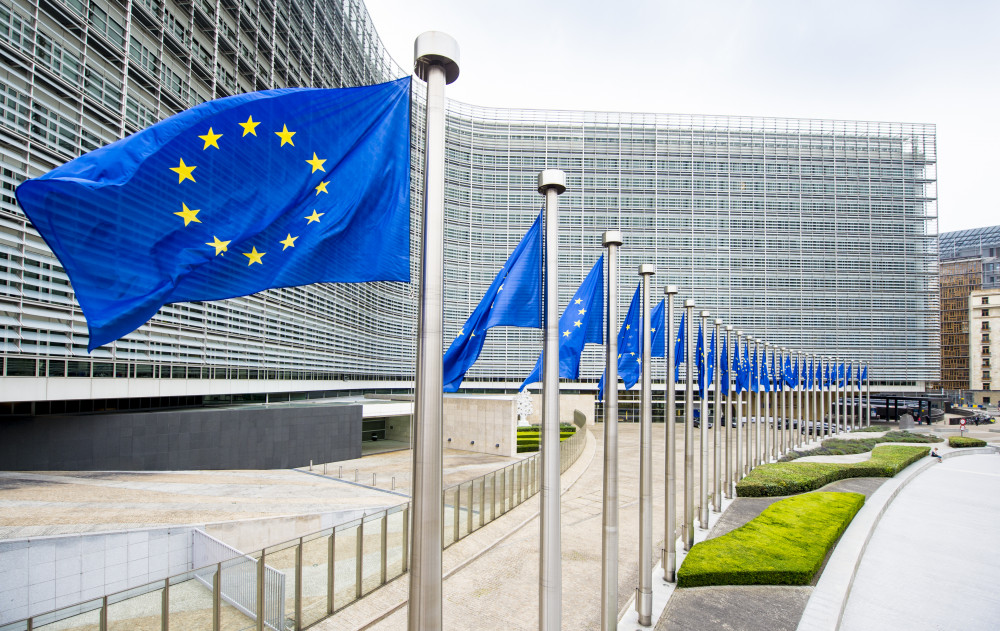
For more than seven decades, European integration has been built around a deceptively simple idea: countries that once fought each other could become prosperous and secure by pooling parts of their sovereignty. The European Union turned that idea into one of the world's most ambitious political projects, creating a single market, a common currency for much of the bloc and institutions powerful enough to shape national policy.
Yet the political assumptions behind that project are becoming harder to sustain.
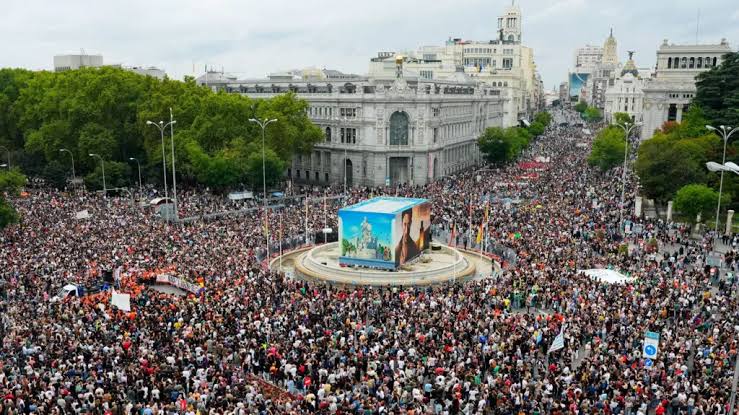
Across Europe, voters are increasingly rewarding parties that question the direction of integration, demand tighter control over migration and argue that national governments should reclaim powers from Brussels. At the same time, the EU is confronting slower productivity growth, high energy costs, demographic pressures, industrial competition from the United States and China, and a radically different security environment.
None of this means the European Union is about to collapse.
The more important question is whether it could become less capable of acting collectively while remaining formally intact.
That may prove to be the more consequential form of European fragmentation.
The European Project Was Built on a Different Europe
The EU emerged from the ruins of the Second World War, when European leaders had an unusually strong incentive to make another major conflict between France and Germany practically impossible. Economic integration became a political instrument: if national economies became sufficiently intertwined, war would become not only undesirable but increasingly irrational.
Over the decades, that logic expanded. The European Economic Community became the European Union. The single market connected national economies across borders. The euro removed exchange-rate barriers among participating states. Brussels acquired authority over competition, trade, environmental regulation, agriculture and other areas that had once been almost entirely national concerns.
The extraordinary achievement of the EU is therefore not simply that it created a large market. It created a system in which sovereign states voluntarily accepted constraints on their freedom of action in exchange for the benefits of being part of a larger political and economic structure.
That bargain is now under pressure.
The problem is not that Europeans suddenly hate the European project. Public support for the EU remains substantial. The deeper problem is that European societies increasingly disagree about what the EU should actually do.
That distinction matters.
Europe Is Becoming Politically Fragmented
For much of the post-Cold War period, European politics was dominated by relatively stable centre-right and centre-left parties that broadly agreed on the direction of European integration.
That consensus has weakened.
European politics has become more fragmented, while right-wing and populist parties have gained ground. A September 2026 analysis by the Carnegie Endowment noted that support for radical-right parties in national elections across the EU had risen from roughly 10% in the mid-2000s to about 23%, with such parties participating in or supporting governments in several member states.
These parties do not all want their countries to leave the EU. In fact, many have moved away from outright withdrawal and instead favour a different kind of Union: one with weaker central institutions and greater national sovereignty.
That could be more consequential than a simple exit campaign.
A country leaving the EU is an obvious rupture. A group of governments gradually weakening Brussels from within is much harder to identify as a single historical event.
The result could be a European Union that still has 27 members, still holds summits and still operates a single market, but finds it increasingly difficult to agree on major questions.
Migration Has Become a Test of Solidarity
Few issues illustrate the EU's internal tensions more clearly than migration.
The bloc's external border is shared in a practical sense, but the political consequences of migration are experienced very differently by individual countries. Southern states face much of the pressure from arrivals across the Mediterranean, while countries farther north have historically received large numbers of asylum applications. Eastern governments have often resisted mandatory relocation or EU-level approaches that they believe interfere with national sovereignty.
The EU has responded by attempting to build a common system.
Its new Pact on Migration and Asylum entered into application in June 2026 after years of negotiation. The European Commission says member states have made substantial progress in implementing the new framework, including border procedures, screening and a common solidarity mechanism. But it also acknowledges that significant work remains and that readiness varies among member states.
The political problem is larger than the legislation.
Migration has become a symbol of whether European countries are willing to accept collective solutions when those solutions conflict with domestic political pressures.
A government may agree in Brussels and then face voters at home demanding something very different.
That tension is increasingly central to European politics.
The Economic Problem May Be More Dangerous Than the Political One
Europe's political divisions are visible. Its economic problems are quieter but potentially more consequential.
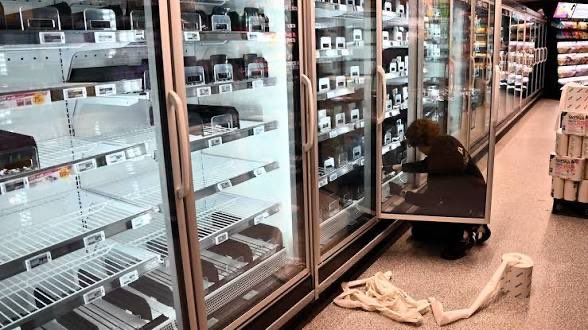
The European Commission's 2026 macroeconomic assessment identifies weak productivity growth, demographic pressures, insufficient investment and a widening productivity gap with the United States as major long-term challenges. It also points to energy prices that remain elevated compared with major trading partners, placing particular pressure on energy-intensive industries.
This matters because Europe's political model depends partly on economic performance.
The EU has built a social contract around relatively extensive public services, social protections and regulation. Those systems are easier to finance when economies are growing strongly and productivity is rising.
If growth remains weak while populations age, governments face an increasingly uncomfortable choice: raise taxes, reduce spending, borrow more or reform the welfare state.
None of those options is politically easy.
The competitiveness problem also goes beyond GDP statistics.
The Commission's 2026 Single Market and Competitiveness Report says EU labour productivity is around 78% of US levels, while energy prices for businesses remain substantially higher than in the United States. It also warns that private investment and venture capital remain weaker than those of major competitors and that progress in integrating the Single Market has plateaued.
Europe therefore faces a strange contradiction.
It possesses a market of hundreds of millions of consumers, enormous accumulated wealth, world-class universities and major industrial companies. Yet it struggles to translate those advantages into the kind of productivity growth generated by the American technology sector.
If that gap continues, economic frustration could reinforce political fragmentation.
The Franco-German Engine Is Under Pressure
For decades, the EU's political machinery depended heavily on an informal partnership between France and Germany.
The two countries did not always agree. In fact, they frequently disagreed. But their willingness to compromise helped provide direction for the wider Union.
That model has become harder to sustain.
Germany's industrial model has been challenged by energy costs, Chinese competition and the transformation of the automobile industry. France faces its own fiscal pressures and political fragmentation. Both countries increasingly have to manage difficult domestic politics before they can build European compromises.
And the EU is now much larger and more politically diverse than it was when Franco-German leadership was sufficient to drive integration.
The centre of gravity has shifted eastward. Poland, the Baltic states and other eastern members have acquired greater strategic importance because of Russia's war against Ukraine. Southern Europe has different priorities, particularly over migration, energy and the Mediterranean.
The EU therefore has more voices than ever—and fewer mechanisms for ensuring that they move in the same direction.
Ukraine Has Forced Europe to Rethink Its Security
Russia's invasion of Ukraine has also exposed a fundamental question: Can Europe defend itself without depending heavily on the United States?
For decades, European countries spent less on defence while relying on NATO—and ultimately American military power—for much of their strategic security.
The Ukraine war has changed that calculation.
EU member states spent an estimated €418 billion on defence in 2025, up 20% from the previous year, according to the European Defence Agency. Spending is projected to reach €454 billion in 2026.
That is not evidence of European collapse. In one sense, it demonstrates the opposite: Europe is responding to a strategic shock by increasing its collective capacity.
European support for Ukraine has also expanded dramatically. By mid-2026, EU institutions and member states had mobilised roughly €224.5 billion in financial, military and humanitarian assistance since Russia's full-scale invasion. European military support had also overtaken US military support in allocated assistance during 2025, according to the European Parliament's research service.
But this creates another challenge.
Defence is an area in which national governments remain extremely protective of their sovereignty. Europe may agree that it needs to spend more, but agreeing on what to buy, where to manufacture it, how to coordinate armies and who ultimately makes strategic decisions is much harder.
Europe is therefore being pushed toward greater strategic integration at precisely the moment when its politics are becoming more nationally focused.
The Single Market Itself Is Showing Strain
Perhaps the most ironic threat to the EU comes from one of its greatest achievements: the Single Market.
The system was designed to remove barriers between European economies. But national regulations, differences in taxation, labour rules and other obstacles continue to make Europe less integrated than the headline statistics suggest.
The European Commission says integration in the Single Market has reached a plateau and warns that national and European barriers are holding back economic potential.
That creates a dangerous feedback loop.
If companies find Europe too fragmented to scale efficiently, investment suffers. If investment suffers, productivity remains weak. If productivity remains weak, political dissatisfaction grows. And when voters become dissatisfied, governments become more reluctant to surrender additional powers to Brussels.
Economic fragmentation can therefore reinforce political fragmentation.
What Would an EU Collapse Actually Look Like?
The phrase “EU collapse” creates an image of flags coming down and borders returning overnight.
That is probably not how it would happen.
The more realistic scenario would be gradual institutional erosion.
Countries could increasingly block common decisions. Governments could selectively ignore EU priorities. National courts and political movements could challenge European authority. Member states could cooperate more closely in smaller regional groups while treating EU institutions as a secondary layer of governance.
Eventually, the Union could become a collection of overlapping coalitions rather than a coherent political project.
There could be a “core” Europe willing to integrate more deeply on defence, taxation, finance and foreign policy, alongside a looser group of countries that want primarily the economic benefits of membership without deeper political integration.
That would not technically be the collapse of the EU.
But it could represent a very different European Union from the one its founders imagined.
Europe Has Survived Crises Before
There is another reason to be cautious about declaring the EU's demise.
The Union has repeatedly appeared close to breaking under pressure.
The eurozone crisis produced predictions of monetary collapse. The migration crisis created enormous political divisions. Brexit demonstrated that membership was not irreversible. The COVID-19 pandemic challenged European solidarity. Russia's invasion of Ukraine created an unprecedented security crisis.
Yet the EU survived each of them.
Indeed, some crises produced deeper integration.
The creation of common financial instruments during the pandemic demonstrated that member states could take steps once considered politically impossible. Russia's war has pushed European governments toward greater defence spending and closer coordination. The migration pact represents another attempt to create a common framework around an issue that had previously produced bitter divisions.
The EU therefore has an unusual characteristic: crises can weaken it and strengthen it at the same time.
The Real Threat Is Not Collapse. It Is Paralysis.
This is why the question “Is the EU falling apart?” may ultimately be the wrong one.
The more important question is whether the EU can continue making difficult decisions at a time when its members increasingly disagree about what Europe should be.
A Union can survive political disagreement. It can survive elections that move to the right. It can survive economic competition.
What becomes dangerous is the combination of all three.
If Europe cannot raise productivity, secure affordable energy, control its external borders, rebuild military capacity and maintain political legitimacy, governments will increasingly ask why difficult decisions should be made collectively rather than nationally.
And if enough governments reach that conclusion, the EU could begin to lose something more important than territory.
It could lose the habit of acting together.
That would be a very different kind of collapse.
Not the dramatic disappearance of the European Union, but the gradual disappearance of the political confidence that created it.
For now, the EU remains a remarkably powerful institution. It has survived crises that once seemed existential, and its member states continue to benefit enormously from the single market and from cooperation that would be difficult to reproduce nationally.
But Europe has entered a new period.
The old assumption was that integration was the destination and crises were obstacles along the way. The emerging question is whether integration itself still has enough political support to remain Europe's answer to those crises.
The EU does not appear to be falling apart.
But Europe is increasingly debating what it means to hold together.