Germany's Riots Reveal a Deeper Crisis at the Heart of Europe
From France to Germany, Europe's streets are becoming a battleground for a generation increasingly frustrated by rising living costs, deteriorating public services and governments struggling to respond. The latest unrest in Germany suggests that the continent's social tensions are reaching its largest economy.
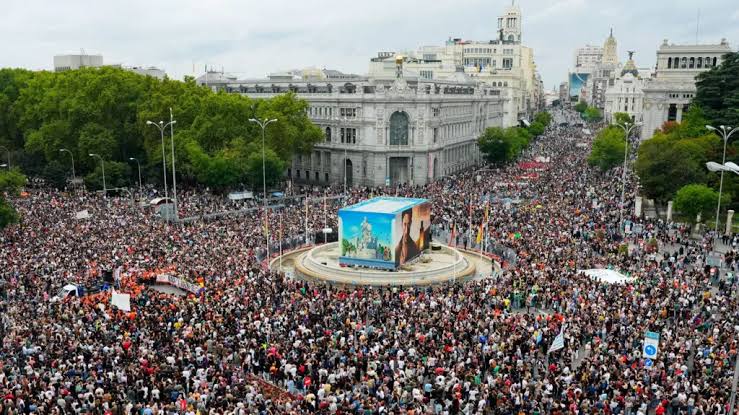
Germany becomes Europe's latest flashpoint. Germany has long represented something important in the European political imagination: economic strength, institutional stability and a functioning social model. But on October 31, that image faced another uncomfortable challenge as tens of thousands of people joined youth-led demonstrations across more than 30 German cities.
Organised under the campaign name Gen Z regelt, meaning "Gen Z takes charge", the demonstrations brought young people into the streets to demand better education, more affordable living conditions, greater investment in public services and opposition to compulsory military service.
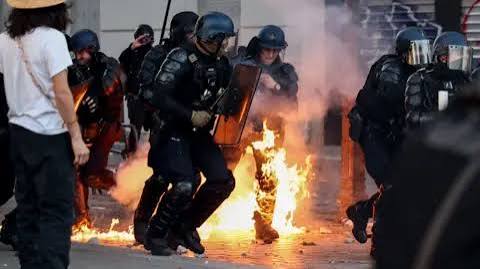
The demonstrations took place in 34 cities, including Berlin, Frankfurt and Munich. While most rallies remained peaceful, violence erupted in several locations as the day progressed. Frankfurt experienced serious looting and property damage, with shops targeted and police reporting that incendiary devices were thrown at emergency services. In Hamburg, barricades were set on fire, while clashes between demonstrators and police were also reported in Cologne, Stuttgart and Berlin.
In Frankfurt, police deployed water cannons as officers attempted to regain control of parts of the city centre. More than 30 temporary arrests were reported, according to subsequent reporting by the Associated Press. Berlin police also reported dozens of arrests and injuries among officers.
The violence was significant, but it should not obscure the larger event: a nationwide demonstration reflecting growing frustration among young Germans about their economic prospects and the direction of their country.
The organisers distanced themselves from the violence, arguing that the movement's demands were about social and economic conditions rather than destruction.
Germany has now become another major setting for a wave of protests that has been building across Europe.
From France to Germany: The unrest is spreading
The German demonstrations did not emerge in isolation. They followed weeks of protests in France and other European countries, where economic pressure, housing shortages and dissatisfaction with public services have brought different groups of people into the streets.
France has been one of the most visible centres of this unrest. Student demonstrations and broader public protests over the cost of living and underfunded services have repeatedly disrupted major cities. Some demonstrations have escalated into confrontations with police, looting and property destruction.
Elsewhere, housing affordability has become a major source of public frustration. In Portugal and Spain, rising rents and limited access to affordable accommodation have fuelled demonstrations. Italy has also experienced growing mobilisation around wages, employment, healthcare and public services.
These movements do not share a single leadership structure or political programme. Their demands differ, and the political circumstances in each country are distinct. Nevertheless, they reveal a common problem: many Europeans increasingly feel that economic growth, public policy and political promises are failing to translate into a better standard of living.
Germany's entry into this wider pattern is particularly significant because it challenges the assumption that the continent's most economically powerful countries are insulated from the social tensions affecting their neighbours.
Why Germany's young generation is frustrated
The German protests brought several grievances together, but three issues stand out: the cost of living, the condition of public services and the prospect of compulsory military service.
For younger Germans, economic independence has become increasingly difficult. Housing costs, everyday expenses and uncertainty about future employment have made the transition into adulthood more challenging. Having access to education and employment opportunities does not necessarily mean being able to afford a stable life.
The state of public infrastructure has added to the frustration. Students have raised concerns about deteriorating school and university buildings, inadequate facilities and insufficient investment in education. These are not abstract political complaints. They affect the everyday experience of people expected to study, work and compete in an increasingly demanding economy.
Military service has introduced another source of tension. Germany is reconsidering how it recruits and maintains the armed forces as European security concerns intensify following Russia's invasion of Ukraine. For some young people, the prospect of compulsory service represents an additional burden imposed by a political system that they believe has not adequately addressed their existing problems.
The argument is not necessarily that young Germans reject national defence. Rather, the protests reveal a disagreement over who should bear the costs of a changing security environment and whether governments are distributing those responsibilities fairly.
This is why the demonstrations have attracted attention beyond the immediate question of military policy. They reflect a broader generational dispute about priorities, public spending and the future social contract.
Germany's economic troubles make the unrest more consequential
Germany's importance to Europe makes these developments particularly consequential.
As the continent's largest economy, Germany has traditionally been an important engine of European industrial production, employment and trade. Its economic difficulties therefore extend beyond its national borders.
The country has struggled to restore sustained economic growth after a prolonged period of industrial weakness, high energy costs, international competition and structural challenges. Its manufacturing sector has faced pressure, while demographic changes are increasing demands on pensions, healthcare and the wider welfare system.
The retirement of large numbers of baby boomers is also putting pressure on the working-age population. Fewer workers must increasingly support an ageing society, creating difficult choices about taxation, public expenditure and social protection.
These pressures complicate the government's ability to respond to public demands.
Young people want better education, affordable housing and opportunities to build secure lives. Older generations depend on pensions and healthcare. Businesses need competitive energy costs, investment and skilled workers. Meanwhile, the government must also finance defence and meet its European security commitments.
The result is a political and economic balancing act in which different generations and interest groups increasingly compete over limited resources.
The protests expose the social consequences of that competition.
When economic frustration becomes a political problem
One of the most important questions raised by the German demonstrations is whether Europe's established political institutions can maintain public confidence while asking citizens to accept difficult economic choices.
Economic hardship does not automatically produce political instability. Nor does every demonstration represent a rejection of democratic institutions. Protest remains a legitimate part of democratic life, particularly when citizens believe their concerns are not receiving sufficient attention.
However, persistent frustration can create opportunities for political movements that promise simple solutions to complicated problems.
When mainstream parties struggle to address housing shortages, stagnant economic prospects and deteriorating public services, voters may become more receptive to political alternatives that challenge established institutions.
Germany has already experienced significant political polarisation and the growing influence of anti-establishment parties. Further deterioration in economic confidence could make that environment more difficult to manage.
There is also a distinction between peaceful political mobilisation and organised violence. Looting, attacks on emergency services and the destruction of businesses do not resolve the grievances that bring people into the streets. They can instead undermine public support for demonstrations and give governments justification for increasingly restrictive responses.
German authorities have warned about extremist groups seeking to exploit public demonstrations. The challenge for the state is to protect the right to protest while holding individuals responsible for criminal acts.
That balance will matter as demonstrations continue.
Europe's deeper problem is not confined to one generation
It would be misleading to describe the unrest as exclusively a Gen Z phenomenon. Younger demonstrators may be especially visible, but the underlying pressures extend across generations.
Parents struggling with housing costs, workers concerned about wages, students worried about education and families facing rising everyday expenses can all experience the consequences of economic insecurity.
The common denominator is a growing gap between what European societies promise and what many citizens feel they can realistically achieve.
For decades, the European social model has been associated with economic opportunity, public healthcare, education, social protection and relatively high living standards. Those achievements remain important, but maintaining them has become more complicated amid ageing populations, weaker growth, geopolitical uncertainty and pressure on government budgets.
Europe is also confronting competing demands. It must invest in defence, manage the energy transition, remain competitive in global markets and preserve social protections. Each priority carries financial and political costs.
The question is no longer simply whether governments can fund every demand. It is whether they can explain their choices, distribute the burdens fairly and convince citizens that the sacrifices will produce a better future.
Without that confidence, economic disagreements can become deeper disputes about political legitimacy.
Germany's unrest is a warning for Europe
The events of October 31 do not establish that Germany is entering a period of nationwide instability. Nor do they prove that Europe's different protest movements are part of a single coordinated uprising.
But they do demonstrate that the social pressures visible in France, Italy, Spain and Portugal are not limited to countries already experiencing acute political or economic difficulties.
Germany's appearance in this wider pattern matters because the country's economic strength has traditionally made it a reference point for European stability.
When young people in Europe's largest economy take to the streets over education, affordability, public investment and military obligations, governments elsewhere should pay attention.
The challenge facing Europe is larger than controlling demonstrations or restoring order after a night of violence. It is about rebuilding confidence in an economic and political system that many citizens increasingly feel is failing to deliver on its promises.
Germany's riots may eventually be remembered as an isolated episode of violence surrounding a much larger peaceful mobilisation. But the grievances behind the demonstrations are unlikely to disappear simply because the streets become quiet again.
Europe's stability will depend not only on how effectively its governments respond to unrest, but also on whether they can address the conditions that make such unrest possible in the first place.