France Reports the First Human Shamonda Virus Case
A fatal infection in an immunocompromised patient in France marks the first recorded human case of Shamonda virus, though health authorities emphasize there is no evidence of wider transmission.
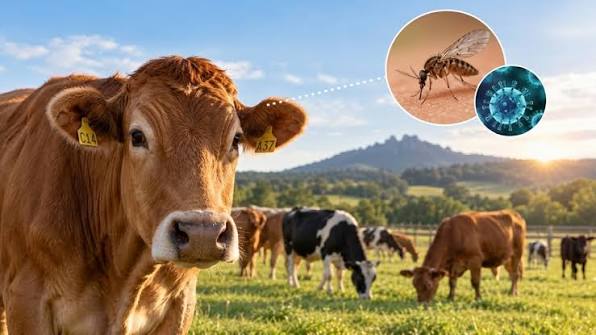
A virus long cataloged exclusively in livestock has crossed into a human host for the first time. The World Health Organization confirmed the development following a public statement by Director-General Tedros Adhanom Ghebreyesus, who reported that French public health authorities documented an infection of Shamonda virus in an immunocompromised patient who subsequently died.
The death has prompted immediate international scrutiny, but researchers and epidemiologists are cautioning against hasty conclusions. A single fatality in a patient with a weakened immune system does not establish that Shamonda virus is lethal to the general population, nor does it prove that the pathogen was the sole cause of death. Instead, the case presents a specific scientific puzzle: what happened in France, how did the virus reach a human host, and what does this isolated incident indicate about the broader risks of animal orthobunyaviruses?
An animal pathogen with a pastoral history
Shamonda virus belongs to the genus Orthobunyavirus within the family Peribunyaviridae. First identified decades ago in domestic livestock in western Africa, the virus takes its name from the Nigerian settlement where veterinary researchers originally isolated it. For decades, virologists treated the pathogen as a veterinary concern rather than a human pathogen.
In animal populations, Shamonda virus has historically circulated among domestic ruminants, including cattle, sheep, and goats, with detections also documented in horses and other domestic fauna across parts of Africa and Asia. Like several other members of the Simbu serogroup within the orthobunyavirus genus—most notably Akabane virus and Schmallenberg virus—veterinary research has linked Shamonda virus primarily to reproductive disorders in livestock. In pregnant ruminants, related Simbu serogroup viruses can cause congenital malformations, premature births, and abortions, although adult animals often experience mild or inapparent infections.
Throughout decades of veterinary monitoring, documented human infections were entirely absent from medical literature. The pathogen existed strictly on the animal side of the zoonotic ledger.
The vector question and the French case
Transmission of Shamonda virus among livestock has long been attributed to hematophagous insects, specifically Culicoides biting midges. These tiny gnats, often measuring less than three millimeters, serve as biological vectors for a wide range of animal arboviruses, including bluetongue virus and Schmallenberg virus. When midges feed on the blood of a viremic animal, the virus can replicate within the insect's salivary glands and pass to another host during subsequent blood meals.
While the association between Culicoides midges and Shamonda transmission in livestock is strongly supported by veterinary field data and insect isolations, definitive proof of direct midge-to-human transmission in the French case remains an open hypothesis rather than an established fact.
In reconstructing the case from public disclosures by French health authorities and the WHO, specific clinical and geographic details remain tightly held. The patient resided in France and suffered from significant immune system compromise. Following the onset of acute symptoms that led to clinical evaluation and specialized diagnostic testing, genomic sequencing confirmed the presence of Shamonda virus. What remains publicly unverified is the precise rural or suburban setting of the exposure, the specific density of Culicoides midges in the patient's immediate vicinity, and whether the virus was actively circulating among nearby livestock herds prior to the individual's hospital admission.
Investigating teams are currently evaluating whether the patient contracted the virus through an incidental bite from an infected midge that had previously fed on local livestock, or whether an alternate, direct exposure route occurred. French authorities have not endorsed any single route as confirmed.
Immunocompromise and the biology of spillover
The patient's clinical baseline is central to interpreting the discovery. When an individual has a severely compromised immune system, the barriers that typically prevent poorly adapted animal pathogens from establishing infection are impaired. Opportunistic pathogens—microbes that an intact immune system readily controls or neutralizes—can exploit immunological deficits to establish persistent replication and severe disease.
A solitary transmission event under these circumstances does not demonstrate that Shamonda virus has evolved to bind efficiently to human cellular receptors or establish high viral loads in healthy hosts. Throughout the history of infectious disease surveillance, single-instance spillovers into immunocompromised individuals have occurred across diverse animal viral families without triggering subsequent chains of human infection.
At present, international and French surveillance systems report no evidence of human-to-human transmission, no secondary human infections among healthcare workers or close household contacts, and no signs of sustained viral circulation within human populations. Crucially, initial genetic data has pointed to no systemic adaptive mutations that would suggest the virus has altered its tropism to facilitate general human infectivity. No wider regional or national outbreak has materialized.
That the infection was identified at all reflects the growing sensitivity of modern molecular diagnostics. Across European medical centers, the routine deployment of unbiased metagenomic next-generation sequencing on unexplained clinical samples is increasingly detecting viral spillover events that would have gone unnoticed or unclassified in previous decades. Improved detection often reveals rare phenomena that already occurred at baseline levels rather than heralding an abrupt epidemiological shift.
Could Shamonda virus become the next major outbreak?
Based on current clinical and veterinary evidence, the probability of Shamonda virus initiating a broad human epidemic remains low. Arboviruses adapted to insect-animal transmission cycles face formidable evolutionary hurdles in sustaining human-to-human transmission.
For scientists to adjust their risk assessment materially, several distinct milestones would need to appear in the epidemiological data. Virologists would need to identify repeated, independent human infections across demographically diverse populations, including healthy individuals without baseline immune deficiencies. Surveillance teams would also need to detect efficient transmission between people, or genomic sequencing would have to reveal functional mutations that enhance viral entry and replication in human cells. None of these indicators have been reported in France or elsewhere.
In response to the case, French public health bodies and the WHO have initiated standard containment and inquiry protocols. These measures combine vector surveillance to trap and test local Culicoides populations, veterinary sampling among livestock in the surrounding area, retrospective reviews of local clinical admissions, and detailed phylogenetic analysis of the isolated viral genome to trace its geographic lineage.
What We Still Don't Know
Significant gaps remain in the public record surrounding the French diagnosis. Authorities have not yet disclosed the specific underlying medical condition or therapeutic regimen responsible for the patient's immunocompromised state, nor the precise chronological onset of symptoms.
The exact environmental reservoir in France is equally unresolved. Investigators have not publicly confirmed whether Shamonda virus has established a sustained, undetected presence among French livestock populations or whether wild fauna might be harboring the agent. Until entomological surveys identify infected vectors at the site of exposure, the exact chain of transmission that carried a pathogen from an African ruminant lineage into a hospital ward in France will remain open to scientific investigation.