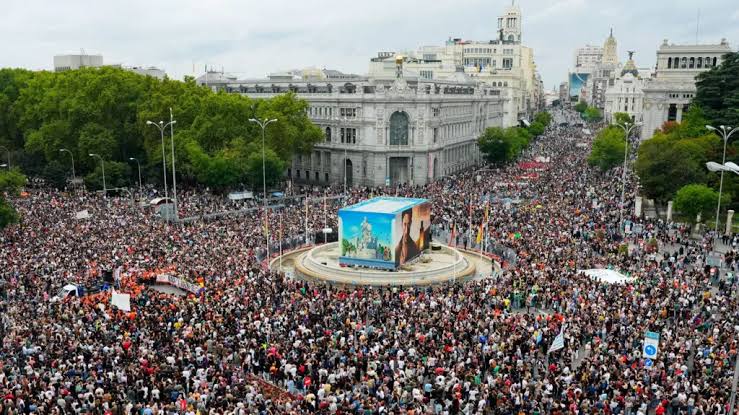
Albania Protests Escalate with Fires at Supreme Court as Calls for Rama’s Resignation Grow
Protests in Tirana have escalated into direct attacks on public buildings, including a reported fire at the Supreme Court, as a coastal development dispute broadens into an anti-government movement.
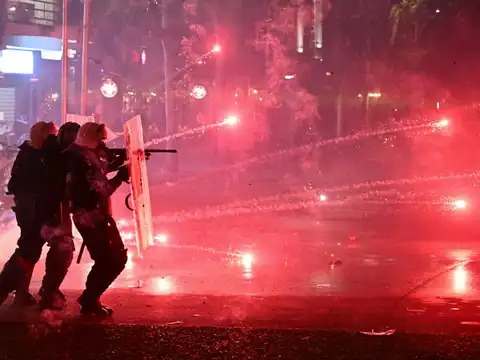
Flames rose at the Supreme Court in Tirana during a severe escalation of demonstrations that has seen protesters clash directly with police forces, target public buildings, and prompt widespread vandalism, arrests, injuries, and property damage across the capital. The unrest marks a dramatic turn for a civil movement that began as localized opposition to a proposed luxury tourism development along Albania's southern coast, evolving swiftly into an expansive, multi-layered challenge to Prime Minister Edi Rama and his government.
What began as a localized mobilization has widened to encompass a sprawling array of public grievances. Demonstrators are now openly demanding Edi Rama's resignation, directing fierce anger at alleged corruption and government misconduct. Protesters have also raised urgent concerns over soaring education costs and deteriorating university conditions, high youth unemployment, and stubborn economic frustrations driven by living costs and a perceived lack of political accountability. Underpinning the entire movement is a profound distrust of established political parties across the board.
The protest wave is widely referred to as the “Flamingo Revolution,” drawing its unusual symbol from the bird associated with the delicate ecosystems of the country's southern coast. The movement's origins trace directly back to intense opposition against proposed luxury tourism developments along Albania's southern shores. Environmentalists and local residents have fiercely objected to these projects, warning of irreversible ecological damage to coastal habitats and the displacement of local communities.
A central flashpoint in the coastal controversy involves investment interests tied to Jared Kushner, son-in-law of U.S. President Donald Trump. The proposed luxury resort development has been touted for its economic promises, but it has simultaneously triggered intense environmental controversy regarding its exact location and scale. Public debate has frequently grappled with the distinction between Kushner's private investment interests and the formal role of the Albanian government in approving, facilitating, and defending the development.
The disputes surrounding the land have played out across legal battlegrounds, involving contested ownership claims, environmental protections, and administrative approvals. Relevant court proceedings and government decisions have steadily fed into the broader public fury, transforming technical land disputes into a referendum on governance and transparency.
Prime Minister Edi Rama has responded to the escalating crisis with a steadfast refusal to step down. Defending his administration, Rama has pointed directly to his democratic electoral mandate and Albania's ongoing ambitions for European Union accession. The government maintains that the coastal developments are fully lawful and beneficial for the national economy, while dismissing allegations of corruption. Officials have defended police actions during the protests as a necessary response to maintain public order, citing property destruction and attacks on public infrastructure.
The people filling the streets of Tirana do not represent a single unified political movement or leadership structure. Instead, the protests are powered by a loose coalition of diverse groups: university students, young people, environmental activists, opposition supporters, local residents, and various civil-society organizations, each bringing their own distinct set of motivations to the demonstrations.
To understand the gravity of the current unrest, it is necessary to examine Albania's broader political landscape. Edi Rama has enjoyed a long tenure in power, backed by the political dominance of his Socialist Party. While opposition forces have struggled to mount a cohesive electoral challenge, Rama has framed his tenure around steering Albania toward eventual European Union membership. However, the intensity of the current street demonstrations suggests that the political significance of the unrest extends far beyond individual policy battles, threatening the institutional credibility required for EU integration.
What Happens Next?
As demonstrations persist across Tirana and threaten to take deeper root, the immediate trajectory depends on whether the government shifts from its hardline stance toward meaningful concessions or whether the diverse coalition of protesters continues to find common cause against Rama's administration. The unfolding crisis poses a severe test for Albania's political stability, foreign investment climate, environmental policies, and its overarching ambitions for European Union integration.