A 15-Year-Old’s Hand and a €43 Billion Bill: Inside the New French Revolt
Forget the lazy clichés about Paris rioting for sport. As high schoolers barricading crumbling classrooms join forces with returning Yellow Vests and militant unions, a maimed teenager and a €43 billion austerity decree have pushed the Fifth Republic into a crisis it can no longer afford to buy its way out of.
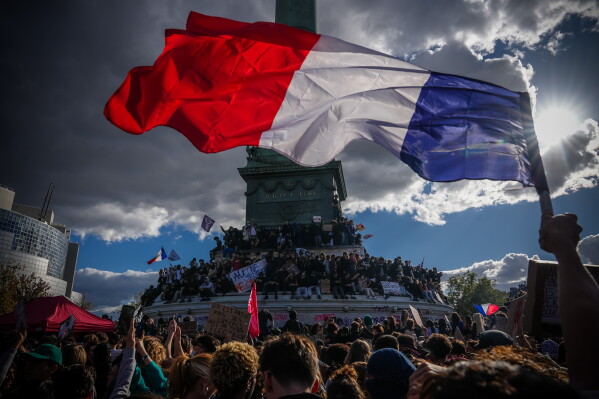
If you only watch the 15-second clips coming out of Paris—the torched kiosks, the black smoke curling up the bronze skirts of the statue at Place de la République, the masked teenagers trading fireworks for water cannon blasts—it is easy to shrug and say, “Well, it’s autumn in France.”
The outside world loves to treat French protests like a quaint national pastime, somewhere between buying a warm baguette and complaining about American tourists. Whenever the boulevards fill with tear gas, international observers roll their eyes at a country that seemingly riots for sport.
That reading has always been lazy. Right now, it is dead wrong.
What is unfolding across Paris, Marseille, and Lyon is not the usual ritualistic choreography between union bosses and the Élysée Palace. It is a generational and economic collision that the French state has spent the last eight years desperately trying to prevent. Two completely different fires have merged: fifteen-year-olds barricading crumbling suburban high schools and working-class parents pulling their fluorescent Gilets Jaunes (Yellow Vests) out of the back of the closet.
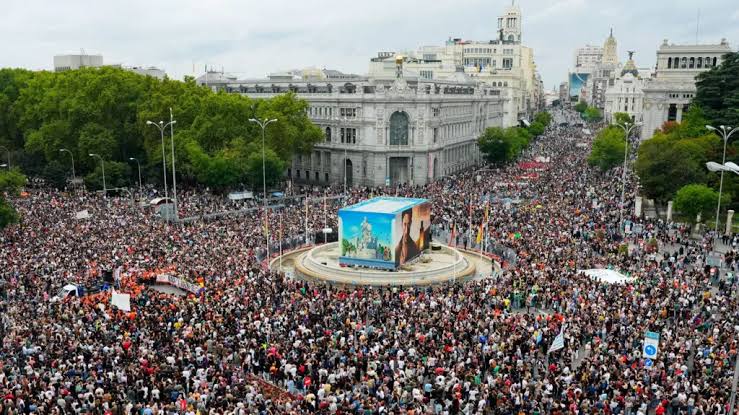
By midday on Saturday, authorities had already counted 140 separate demonstrations outside Paris before the main capital marches even hit their stride, with tear gas choking city centers and metro stations shuttered around the Champs-Élysées and the Arc de Triomphe, according to reports from The Jerusalem Post. To understand why the streets are burning—and why this crisis threatens to paralyze the Fifth Republic—you have to look past the riot shields and examine two things: a 15-year-old’s severed hand, and a €43 billion spreadsheet.
The Spark: Crumbling Classrooms and Stun Grenades
This revolt didn’t start in a union hall. It started at the school gates.
When the autumn school term kicked off in September, French teenagers in the working-class northern suburbs of Paris didn’t walk into the polished, egalitarian Republic promised in their civics textbooks. They walked into overcrowded, underfunded lycées (high schools) where teachers haven't been replaced, ceilings leak, and heating is treated like a luxury.
For weeks, high schoolers in places like Saint-Denis began stacking plastic trash cans and metal fencing in front of school entrances. In France, the blocus—the student blockade—is an old tradition. Usually, the kids chant for a week, the Education Ministry promises a few million euros in emergency staffing, and everyone goes back to class before the November rain sets in.
Except this time, the government didn’t send negotiators. It sent the CRS—France’s heavily armored riot police.
Hundreds of minors were detained in initial sweeps, as documented in coverage on YouTube. Schools were set on fire. And as the confrontations escalated, police deployed grenades de désencerclement and explosive stun grenades designed to disperse crowds through concussive blasts.
Then came the breaking point that turned a school strike into a national trauma: during a demonstration, a 15-year-old boy picked up a police stun grenade and had his hand blown off, a grisly milestone detailed by ARN News Centre and CBS News.
In any country, a state weapon maiming a child is a scandal. In France, it is lighting a match in a room full of gasoline. The internal police watchdog opened investigations into at least two dozen cases of alleged police violence, while Prime Minister Sébastien Lecornu pointed out that more than 900 police officers had also been injured in the weeks of chaos. Interior Minister Laurent Nuñez scrambled to announce a suspension of stun grenades during student demonstrations, and international figures like Greta Thunberg showed up outside a high school in Saint-Denis to tell the teenagers the world was watching.
By the time the government tried to recalibrate, the psychological line had already been crossed.
Even the government's own retreat on weapons lasted barely a few days. Ahead of Saturday’s nationwide marches, Nuñez went on French television to warn that because adults and broader protest groups were joining the students, the gloves were coming back off: if clashes broke out, "all types of intermediate weapons can be used".
When the state maims a high schooler and threatens more force, French labor doesn't just write an angry press release. During the marches, members of the CGT—one of France's largest and most militant trade union federations—physically linked arms around the teenage contingents, forming a human shield between the riot police and the kids, according to reporting in The Militant.
Mickael Sauvage, an aerospace worker who stood in the no-man's-land between the batons and the high schoolers, summed up the mood on the pavement: "Young people are worried about their future. The trap is that the government is pushing them to violence, so that public opinion will turn against them and their demands won't be heard".
The Fuel: The €43 Billion Austerity Trap
Which raises the obvious question: Why doesn't President Emmanuel Macron just open the checkbook?
For decades, the standard playbook for a French president facing a street rebellion has been simple: wait until the trash piles up or the Tear Gas reaches the tourist districts, then announce a multi-billion-euro concession. That is how Macron survived the original Yellow Vest uprising in 2018—by abandoning his fuel tax and signing off on billions of euros in tax cuts and subsidies. That is how Paris cushioned the COVID-19 pandemic and the European energy crisis: “Quoi qu’il en coûte” (Whatever it takes).
So why refuse to extend the education budget now?
Because France is broke.
For years, Paris bought social peace with borrowed money, and the bill has finally arrived on the desk. France’s budget deficit is projected to hit 5.4 percent of GDP—one of the worst fiscal holes in the European Union—and without drastic surgery, Prime Minister Lecornu warns it could spiral toward 6.5 percent next year, according to analysis from the Carolina Political Review. Bond markets are jittery, credit rating agencies are circling, and Brussels is demanding discipline.
To stop the bleeding, the government has unveiled what Socialist Party spokesperson Arthur Delaporte aptly called a "bitter austerity potion". Depending on how you count the line items between Lecornu’s broader €54 billion fiscal tightening target and Finance Minister Roland Lescure’s immediate €43 billion ($48 billion) in brutal austerity budget cuts, the message to the French public is identical: the state is shrinking, public sector wages are freezing, and classrooms are not getting rescued.
Worse, the government doesn't even have the votes to pass this pain democratically. Macron’s minority coalition lacks a parliamentary majority. Rather than compromise with the left-wing opposition by taxing corporate windfalls or the ultra-wealthy, Finance Minister Lescure openly declared on October 6 that the government could simply bypass parliamentary approval altogether and ram the €43 billion cuts through by executive order.
Stop and consider how that sequence of events feels if you are a working-class parent living in a small town in western France or a concrete apartment block outside Lyon:
Your cost of living—from groceries to heating—has been grinding your paycheck into dust.
Your teenager’s school is missing teachers and literally falling apart.
When your kid protests, the state answers with concussive grenades that blow off a teenager's hand.
When your elected representatives try to block the budget cuts in Parliament, the Finance Minister threatens to erase their vote with an executive decree.
And then President Macron stands at a podium in Brussels and lectures you that while there is a right to protest, "this right comes with the need to respect... respect for property, and therefore a commitment not to insult or destroy".
"Respect for property" is a tough sell when citizens feel the state no longer respects their children’s bodies or their democratic ballots.
The Ghost of 2018: Why the Yellow Vests Came Back
That disconnect is why the government’s worst nightmare materialized on Saturday: the return of the Gilets Jaunes.
For years, the high-visibility yellow safety vest—required by law to be kept in every French vehicle—lay dormant on dashboards. The movement that terrified the French establishment in 2018 had fractured and faded after Macron bought it off.
Historically, French protests stay in their lanes. When the unions march, they march in organized columns behind balloons and megaphones from Bastille to Nation. When suburban youth riot, the unions keep their distance. When the rural Yellow Vests occupied roundabouts in 2018, the traditional labor unions initially viewed them with suspicion.
The current austerity budget has accomplished what no activist organizer could: it united them.
In a panicked meeting ahead of the weekend, government officials refused to restore education funding, but hastily approved minor measures to trim diesel prices. Why diesel? Because intelligence reports showed that rural workers, farmers, and former Yellow Vests were answering social media calls to converge with the students and trade unions.
It was too little, too late. People like Yannick Maillou, a teacher from La Crèche in western France who first put on a yellow vest in 2018, were already organizing local convergence points alongside the unions.
When a 45-year-old warehouse worker in a neon vest, a unionized railway worker, and a 16-year-old student from Saint-Denis stand behind the same barricade, the French state loses its ability to divide and conquer. The Interior Ministry tried to blame Saturday’s clashes in Marseille and Paris on the "ultra-left", a classic rhetorical move designed to scare moderate voters back into the arms of the government.
Except it is remarkably difficult to convince a country that half a million demonstrators—the figure union organizers cited during the recent wave of strikes, even as police claimed 256,000—are all shadowy far-left extremists.
The Strategy of Tension—and Why It’s Failing
Look closely at how the French government is managing this crisis, and you can see a deliberate, high-stakes political gamble.
Macron’s inner circle knows that a presidential election is looming on the horizon, and the student movement is already reshaping the campaign. They also know they have zero fiscal room to buy off the protesters without triggering a bond market revolt that would send France's borrowing costs into the stratosphere.
Unable to pay and unwilling to yield, the government is falling back on an old French political doctrine: the strategy of tension.
It works like this: You close the metro stations near the Champs-Élysées and the presidential palace. You kettle the marches into tight urban corridors. You allow the tension to boil until the black-clad casseurs (rioters) smash bank windows in Marseille, attack media vans, or set fire to trash piles in Paris. Then, you broadcast the footage of burning streets on the 8:00 PM news and tell the silent majority: Look at the chaos. Only we stand between you and anarchy.
Aerospace worker Mickael Sauvage saw it from the street level when he called it a "trap" to push kids toward violence so public opinion would sour on their demands.
Twenty years ago, that trap worked almost every time. Today, the math has changed. Why? Because the French middle class—the very people supposed to be horrified by a smashed bus stop in Paris—are the ones getting hollowed out by the €43 billion austerity bill.
When the hospital emergency room in your town closes at night for lack of doctors, when your child’s high school has 35 kids to a classroom, and when your purchasing power shrinks every month, a burning barricade on television doesn't make you angry at the teenagers. It makes you wonder why it took so long for someone to strike a match.
A Social Contract That Bounced at the Bank
Walk through a French protest after the first volleys of tear gas have been fired, and you experience a sensory contradiction that exists nowhere else in the Western world.
Your eyes sting and your throat burns from the chemical gas hanging in the damp autumn air. Up ahead, the deep thump of stun grenades echoes off 19th-century Haussmann stone facades, followed by the wail of police sirens and the shatter of glass. Yet fifty yards back, in the middle of the avenue, a brass band of striking workers is playing jazz, teenagers are chanting slogans with the rhythm of a football stadium, and retirees are handing out saline eye-drops to strangers.
Outsiders see chaos. The people in the street see the only democratic lever they have left.
When a minority government announces that Parliament is optional, that €43 billion must be carved out of the public bone to satisfy creditors, and that teenagers demanding teachers will be met with explosives that tear off limbs, the ballot box stops feeling like a solution. In the Fifth Republic, when Parliament is locked, the street becomes the chamber of last resort.
The standoff in Paris is going to stretch well into the coming months because neither side has an exit ramp. If Lecornu and Macron back down on the budget cuts, the bond markets will punish France. If they ram the austerity package through by executive decree while riot police battle high schoolers and Yellow Vests in the boulevards, they risk detonating what remains of the government's legitimacy before the presidential race even reaches full speed.
You aren't watching a seasonal strike over a few extra euros an hour. You are watching a country where the ruling class wrote checks for a decade, sent the invoice to a 15-year-old's classroom, and just discovered that the next generation would rather burn the bill than pay it.